
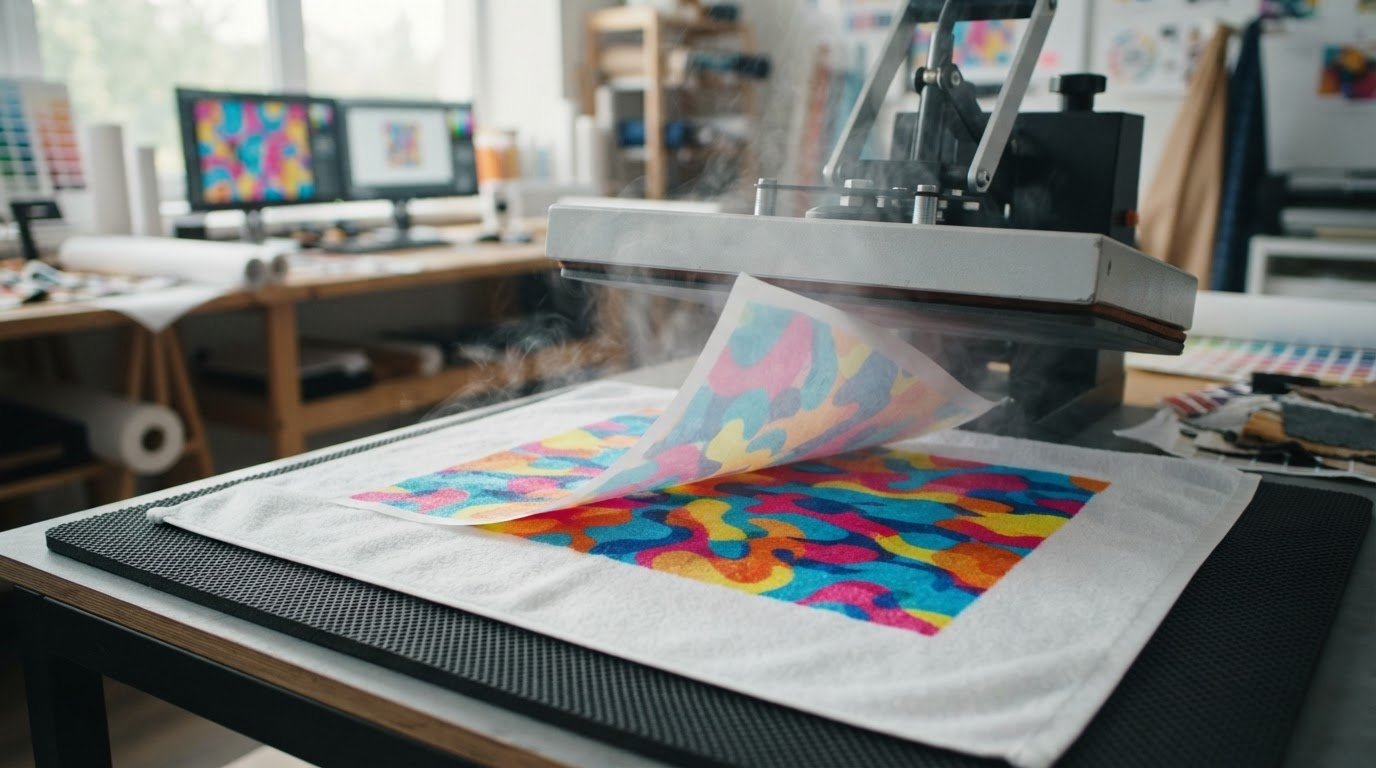
What if the same design looked bold and lasting on one fabric, but faded or failed on another? That’s the key to sublimation printing: heat helps transfer dye into compatible fibers, so the material, not just the artwork, shapes the result. If you’re searching for sublimation printing explained in plain English, start here: the process works best when the ink, heat, design, and substrate are matched.
It’s understandable to wonder how a digital image becomes part of a finished print, or whether sublimation is simply another name for heat-transfer printing. This guide walks through the process, from preparing artwork and printing a transfer to applying heat and reviewing the result. You’ll learn which materials and colors suit the method, what can affect the appearance, and how sublimation compares with other printing techniques. By the end, you’ll have a practical basis for deciding when it fits a custom print and when another method may be a better match.
Key Takeaways
- Get sublimation printing explained in practical terms, from digital artwork and transfer paper to heat application and the finished print.
- Learn why compatible polyester-based materials matter and how the substrate affects color and print results.
- See how to prepare artwork for transfer, including when the design needs to be printed in reverse.
- Compare sublimation with screen printing and embroidery to match the method to your item and design.
- Discover how material, artwork, and branding goals shape the use of dye-sublimated printing on custom towels.
Sublimation Printing Explained: What the Process Actually Is
Sublimation printing explained simply: heat transfers dye from printed paper into a compatible material, rather than leaving the color as a separate layer on its surface. The result depends on the substrate and the production process. Not every fabric accepts conventional sublimation, so the same artwork can look different on different materials, or require a different printing method altogether.
Think of the process in four parts. A digital design is prepared on a computer, then printed onto transfer paper using sublimation ink. Heat transfers the dye from the paper into a suitable substrate. Once the transfer is complete and the paper is removed, the design remains on the substrate. Dye-sublimation printing describes the broader process and its different applications.
For a visual introduction, watch this beginner-friendly overview:

What happens to sublimation ink under heat?
Heat changes the ink so it can move from the transfer paper into compatible polymer fibers or a polymer-coated surface. In practical terms, the color penetrates a suitable material and becomes part of its printed structure. That’s why the substrate matters: heat alone can’t make every fabric receptive to sublimation dye.
The transfer paper has a temporary role. It holds the printed image in position and releases the dye during heat application; it isn’t meant to remain on the finished item. The digital artwork, printed transfer, heat step, and final product are separate stages. Each needs to suit the material and the chosen production process.
How is sublimation different from a surface print?
With sublimation, dye enters compatible fibers or a polymer coating. In a surface-printing method, ink or another print material is deposited on top of the substrate. This describes where the color sits, not a universal promise about how a product will feel or how long its print will last. Those outcomes depend on the material, design, and production conditions.
For example, a polyester-based substrate designed for sublimation may suit a detailed, multicolor image, while another fabric may call for a different method. Compare options based on the item, artwork, and intended use rather than assuming one technique is always better. For promotional towel projects, Rally Towels offers Custom Dye-Sublimated Towels, giving organizations a way to put branded artwork on a towel using this method.
How Sublimation Printing Works, Step by Step
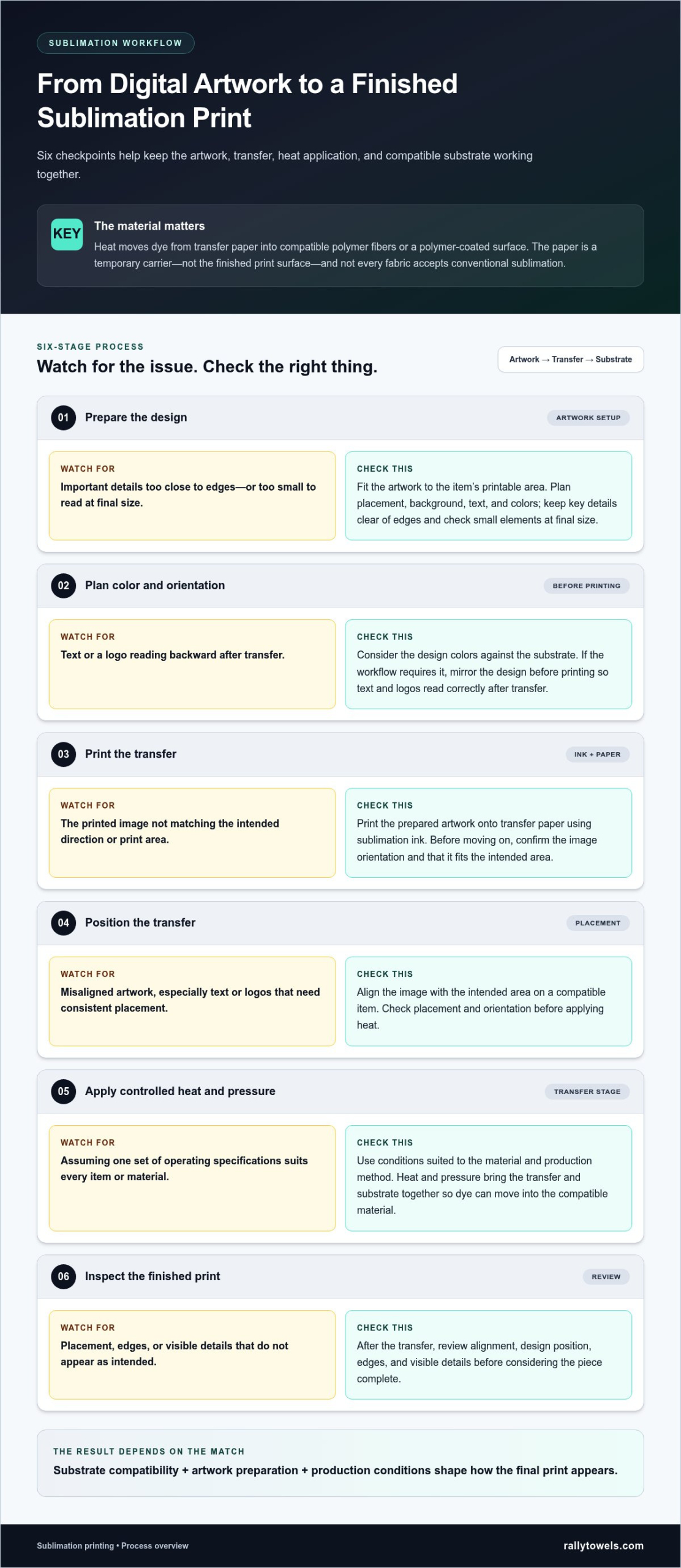
From screen to finished item, sublimation printing follows a clear sequence: prepare the artwork, print it onto transfer paper, align the transfer with a compatible substrate, apply controlled heat and pressure, then inspect the result. Each step can affect how closely the final design matches the original. That’s the practical heart of sublimation printing explained: a successful transfer depends on thoughtful preparation as well as the heat-press stage.
From digital artwork to transfer
Set up the artwork to fit the item’s printable area. Plan placement, background, text, and colors together, keeping important details away from edges where alignment or the product’s shape could affect them. File formats and resolution depend on the equipment and workflow, so there isn’t one universal setting for every job. The PRINTING United Alliance offers printing-industry resources for those looking to learn more about production practices.
- Prepare the design. Build the artwork for the intended item and print area. Check that logos, lettering, and key visual details are placed as planned, and make sure small elements will remain legible at the final size.
- Plan color and orientation. Consider how the design’s colors will work with the substrate. Depending on the transfer workflow, the design may need to be mirrored before printing. Reversing it helps text and logos read correctly after transfer.
- Print the transfer. Use sublimation ink to print the prepared artwork onto transfer paper. Before moving on, confirm that the image is the right way around and that it fits the intended print area.
From transfer to finished print
With the transfer ready, the remaining steps focus on accurate placement and controlled application. Heat and pressure are essential parts of the process, but settings depend on the materials and production method. Don’t assume one set of operating specifications applies to every substrate or item.
- Position the transfer. Align the printed image with the intended area on the compatible item. Check placement and orientation, especially for text, logos, or artwork that needs to sit consistently across multiple pieces.
- Apply heat and pressure. Production equipment brings the transfer and substrate together under controlled conditions. This allows the dye to move from the paper into the compatible material. The transfer paper serves as a carrier during this stage; it isn’t the final printed surface.
- Inspect the result. After the transfer stage, review the item for alignment and whether the artwork appears as intended. Look closely at the design’s position, edges, and visible details before considering the piece complete.
A little attention before pressing can prevent a reversed logo or misplaced design from reaching the finished item. For promotional towel projects, make sure the artwork suits the product and branding goal. Custom dye-sublimated towels are one option for putting that process to work.
Which Materials and Designs Suit Sublimation Printing?
Substrate compatibility is central to sublimation results: the material’s fibers or surface must be able to receive the dye for the process to work as intended. Conventional sublimation is most closely associated with suitable polyester-based fabrics and polymer-coated surfaces. A product’s construction matters, so a material label alone may not tell the whole story. For a clear overview of the material principles, see Sublimation Printing Explained by Michigan State University.
Use this comparison as a starting point, not a guarantee. The specific product construction and production method affect suitability.
| Substrate | Design strengths | Key limitation |
|---|---|---|
| Suitable polyester-based fabric | Can suit colorful artwork, gradients, and detailed graphics. | Results depend on the fabric’s construction and how it’s prepared for printing. |
| Polymer-coated surface | May support a design on a compatible coated item. | The coating must be suitable for sublimation; not every coated surface is. |
| Untreated cotton or other non-compatible material | May suit other decoration methods. | Conventional sublimation dye doesn’t bond to it in the same way as compatible polyester or polymer surfaces. |
Why material composition matters
Sublimation dye needs a compatible polymer structure to bond as intended. That’s why fiber composition can change the outcome: suitable polyester fabric and untreated cotton aren’t interchangeable substrates for conventional sublimation. Special coatings or other processes can change how a surface behaves, but that doesn’t mean all fabrics accept the same method.
Keep general printing principles separate from product facts. Rally Towels are 100% cotton, but that describes Rally Towels, not every dye-sublimated towel. It also doesn’t establish the construction of a particular dye-sublimated towel. Evaluate the product and printing process rather than assuming one material rule applies to every item.
What artwork tends to work well?
Full-color illustrations, photographs, and gradients can make good use of sublimation’s ability to reproduce complex artwork on a suitable substrate. Still, colors on screen may not appear exactly the same on the finished item. The material and production workflow influence the appearance, so treat a digital preview as a guide, not a promise of an exact color match.
Make the design easy to read at its actual print size. Fine lines, small lettering, and tightly packed details can lose clarity when reduced, even if they look sharp on a large monitor. Before production:
- Use a clear, high-quality artwork file.
- Check text, logos, and fine details at the intended print size.
- Review a proof when the production workflow provides one, paying attention to placement and overall appearance.
These checks connect the artwork to the substrate and branding goal. Rally Towels offers Custom Dye-Sublimated Towels for organizations considering a printed towel as a promotional item.
Sublimation vs. Other Printing Methods: How to Choose
Choosing a decoration method starts with the item, not just the artwork. Sublimation can suit full-color designs when the product has a compatible substrate. Screen printing and embroidery apply designs in different ways, so the best fit depends on the material, the amount of color and detail, and the look you want. No method is right for every project.
- Sublimation: Consider it for compatible polyester-based materials or suitable polymer-coated surfaces. It can reproduce multicolor artwork, gradients, and detailed images. Product construction affects suitability.
- Screen printing: Applies ink through a screen onto a product’s surface. It can suit designs built around defined shapes and colors, but the material and artwork still need to work with the production process.
- Embroidery: Forms a design with stitching rather than printed ink. It creates a thread-based visual treatment, so it may suit logos or lettering designed for that look. Fine details and product material can influence how well a design translates.
These are broad distinctions, not performance guarantees. A design with photographic detail has different needs from a simple logo, and the same decoration method may not suit every fabric or item. Compare the artwork’s color coverage and detail with the product’s actual material and specifications before choosing a method.
When does sublimation make sense?
Consider sublimation when the design uses several colors, gradients, or image-like detail and the specific product is made for the process. For example, an event organizer planning a towel graphic with a full-color mascot, background, and lettering might explore sublimation if the towel’s stated construction is compatible. If the design is a small, single-color mark, another method may be a closer visual match. Start with the product, then choose the process.
When should you compare another method?
If the product is cotton or another substrate not suited to conventional sublimation, compare methods designed for its material rather than assuming sublimation will work. Screen printing places ink on the surface; embroidery builds the design with thread. Either may be worth considering depending on the desired appearance, artwork, and item. Check whether small text stays legible and whether the design’s colors and coverage suit the method.
For custom towels, weigh material and design goals together. A practical review of towel printing methods can help clarify how decoration choices differ. Then match the design to the product’s stated specifications instead of choosing by artwork alone.
Planning a branded towel project? Explore custom towel options and consider which decoration method best fits your design and intended item.
Applying Sublimation Printing to Custom Towels
A custom towel design needs to work across three things: the artwork, the towel’s material, and the branding goal. A full-color event graphic has different needs from a simple logo, and printing methods aren’t interchangeable across every towel construction. Rally Towels offers Custom Dye-Sublimated Towels, while Rally Towels are 100% cotton. Those are distinct product facts, so don’t assume the material or dimensions of one towel type apply to another.
What to consider before preparing a towel design
Start with the specific product and its printable area. For Rally Towels, the overall size is 11 × 18 inches, with a 9 × 14 in printed/design area. These dimensions apply to rally towels only. Keep key branding elements within the printed area, use clear logo artwork, and make sure text stays readable at its intended size. For another towel type, base the design on that product’s own specifications.
Match the artwork to the intended use, too. A bold team graphic for an event giveaway may call for a different layout from a small corporate logo. Check contrast, spacing, and how the design will appear on the towel. Organizations considering this method can explore dye-sublimated towel options as they plan a branded order.
How Rally Towels supports custom orders
Rally Towels serves organizations ordering promotional products, with an award-winning customer service department to support custom orders. The design options are Screen Printing, Embroidery, Dye Sublimated, PMS Colors. Choose according to the item, its material, and the look the artwork needs to achieve. A printing method that suits one towel should not be assumed to suit every other product.
Custom orders have a minimum of 25-piece order, and all orders include free shipping. As you prepare the project, bring together the artwork, intended branding outcome, and product choice. That gives the design a clear direction and helps keep product specifications distinct across towel types.
Ready to plan a branded towel project? Explore custom towel printing and find an option that fits your organization’s needs.
Turn Your Design Into a Branded Towel
Move from understanding the process to planning a piece that represents your organization. Start with the impression you want to make, then shape the artwork and towel choice around that goal. A promotional giveaway, a stadium event, and a recognition gift may call for different design priorities. The right production choice is the one that fits the item and the job it needs to do.
With sublimation printing explained, you’re better equipped to consider how artwork, material, and intended use work together. Rally Towels supports organizations with an award-winning customer service department and a 40,000 sq ft factory in California. More than 15,000 satisfied clients include major sports leagues and Fortune 500 firms.
Bring your branding idea to the next step. Explore custom towel printing and find a direction that fits your organization’s next event or promotion. Contact Rally Towels to start planning your custom order. Your design can become a memorable part of the experience.
Frequently Asked Questions
Can sublimation printing be used on cotton?
Conventional sublimation isn’t designed for untreated cotton because its dye bonds with compatible polymer fibers or coatings. Some specialized processes add a polymer layer to cotton, but that’s different from printing directly onto untreated fabric, and results can vary. Rally Towels are 100% cotton; that fact alone doesn’t establish the material or process used for every dye-sublimated towel. For sublimation printing explained in relation to cotton, the key is whether the particular surface has a suitable polymer treatment.
Does sublimation printing work on dark-colored fabrics?
Standard sublimation is generally better suited to light-colored substrates because the dye doesn’t provide an opaque white layer beneath the artwork. On a dark surface, the substrate color can show through and affect how the design appears. For example, pale lettering may not stand out clearly against a dark fabric. If the design depends on bright, distinct colors, consider the base color alongside the print method before approving the artwork.
Is sublimation printing the same as heat transfer printing?
No. Heat-transfer printing is a broad term for processes that use heat to apply a design, while sublimation is one specific method within that group. Other heat-applied transfers can leave a printed layer or material on top of the item. The distinction matters for project planning: a product suitable for one heat-transfer technique may not be suitable for sublimation. Compare the exact process and substrate rather than relying on the general term “heat transfer.”
Can sublimation printing reproduce photographs and gradients?
Yes, sublimation can reproduce photographic images and gradual color transitions on a compatible substrate, making it an option for artwork with blended tones or multiple colors. The final appearance still depends on the source file, substrate, and production workflow. For example, a sunset gradient may look different from its screen preview. Keep important elements clear, and review a production proof when one is provided before the design moves forward.
What file should I use for a sublimation design?
There isn’t one file type that works for every sublimation workflow. Vector artwork is useful for logos and clean shapes because it can be resized without losing edge clarity; raster artwork can suit photographs when the image has enough detail for its final print size. Provide the original, highest-quality version available and keep text readable. Follow the production workflow’s file requirements, since formats and setup needs can differ by equipment and application.
Does sublimation printing change the feel of the fabric?
Sublimation dye enters compatible fibers rather than forming a separate printed layer on top, so the print itself typically doesn’t create the same kind of surface buildup as some other decoration methods. Still, the finished item’s feel depends on the fabric, its construction, and the overall production process. If hand feel matters for a project, consider the specific textile and printing approach together rather than assuming every sublimated product will feel identical.
Can a design be sublimated onto any custom towel?
No. A towel must have a construction compatible with the sublimation process; the word “custom” doesn’t mean every fabric can receive the same decoration. Compare the towel’s material and product specifications with the intended artwork and print method. Rally Towels are 100% cotton, and that specification shouldn’t be assumed for every towel or every dye-sublimated product. Choose based on the specific towel and its stated construction, not appearance alone.