
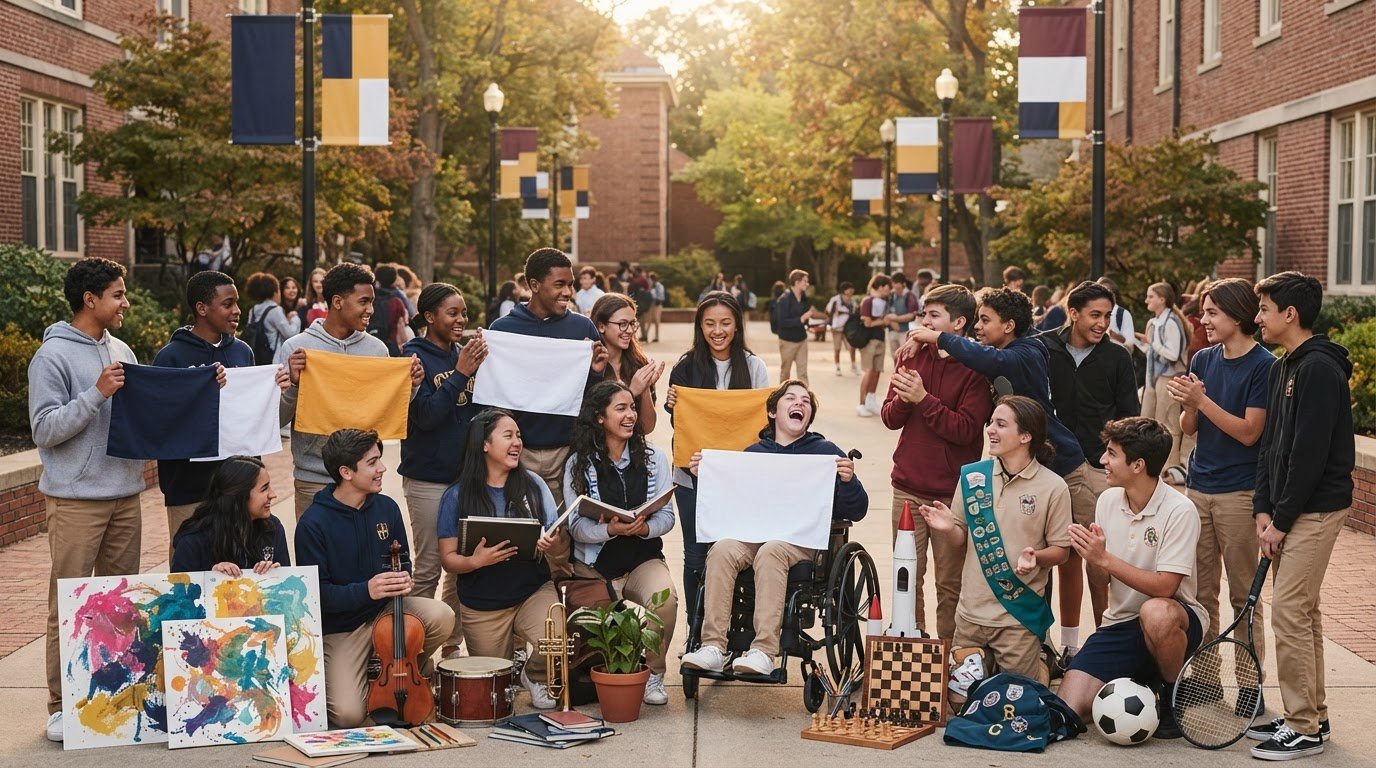
What if school spirit had less to do with cheering for a team and more to do with helping every student feel they belong? If you’re looking for how to build school spirit beyond sports, start with a simple truth: students are more likely to join in when activities reflect their interests and make participation feel welcoming.
It’s frustrating when events draw the same small group while others feel disconnected. The answer isn’t one big burst of hype. It’s inclusive traditions repeated throughout the year, shaped with student input and designed for different grades, personalities, and interests.
This guide will help you create recognizable rituals, plan engaging events, and build an approach you can improve over time. A shared game-day tradition, for example, could include custom rally towels featuring school colors, a team name, logo, or slogan. Rally towels are 100% cotton, made in the USA, and measure 11 × 18 inches overall, with a 9 × 14 inches printed area. Orders require a minimum of 25-piece order and include free shipping. Rally Towels also has an award-winning customer service department.
Key Takeaways
- Learn how to build school spirit by defining what belonging looks like across different grades, groups, and activities.
- Choose traditions for everyday school life, seasonal moments, and major events, with ways for arts, academics, clubs, and service groups to take part.
- Use a clear planning sequence to turn student input into a manageable event, then review what worked and what could improve.
- Create a year-round rhythm that balances special events with regular recognition so school pride keeps growing between celebrations.
- Explore how custom rally towels can add a visible game-day ritual while complementing a broader school-spirit plan.
How to Build School Spirit by Defining What Belonging Means
School spirit can feel strong in one corner of campus and almost invisible in another. A packed game may energize sports fans, while students in the arts, younger grades, or less visible clubs wonder whether school pride includes them. To understand how to build school spirit, first decide what belonging should look and feel like across the whole school.
School spirit is the shared sense of belonging, pride, and participation that connects people to everyday school life, not just one exciting rally. A rally can spark a moment. Lasting spirit shows up in how students recognize one another, join in, and make school traditions their own. A useful overview of its common expressions appears in What is School Spirit?
Agree on that purpose before choosing an event theme, slogan, or merchandise. Otherwise, planning can focus on what looks spirited rather than who feels included. Ask a practical question first: “What do we want students to experience here?” Answers such as “I’m noticed,” “I can contribute,” or “this tradition feels like ours” give organizers a clearer test for each idea.
What does school spirit look like beyond game day?
It can be visible in a classroom mural celebrating student work, a club welcoming new members, a music performance that draws support from across campus, or a service project that brings different grades together. School traditions can also take shape through small routines, such as sharing announcements of student achievements or displaying work from a rotating group of classes.
Students don’t need to attend or compete in sports to contribute. Look for signs that participation is broadening: students volunteer to help, recognize peers outside their own circles, and suggest traditions that reflect their interests. These actions make belonging observable rather than just a slogan on a poster.
- Classrooms: Celebrate projects, effort, and creative ideas.
- Clubs and arts: Invite the school to support performances, showcases, and club-led activities.
- Service and traditions: Give students shared roles in meaningful projects and recurring campus rituals.
Who should help shape a school’s spirit?
Bring students, educators, administrators, families, and booster clubs into the conversation. Each group sees a different part of school life. Students can describe what feels welcoming or awkward; educators notice how routines work in classrooms; families and booster clubs can share community perspectives; administrators can help align ideas with school priorities.
Don’t rely only on the students who already show up. Invite feedback across grades and groups through short classroom conversations, club check-ins, suggestion forms, or a student planning group with varied representation. Ask what activities students would join, what gets in the way, and what they would change.
Then show how their input shaped the plan. When students see their ideas reflected in traditions and events, participation feels shared rather than assigned. Start with a common purpose, listen widely, and build school spirit around the experiences students want to claim as their own.
Build School Spirit with Traditions Students Can Join
Once you know what students want school to feel like, turn that purpose into small, repeatable moments. The best answer to how to build school spirit isn’t a packed calendar of elaborate events. It’s a mix of traditions students can join in different ways, from a quick classroom activity to a campus-wide celebration. Keep familiar school colors, the mascot, and local stories in view, then let students put their own stamp on them.
Which school-spirit activities work for different interests?
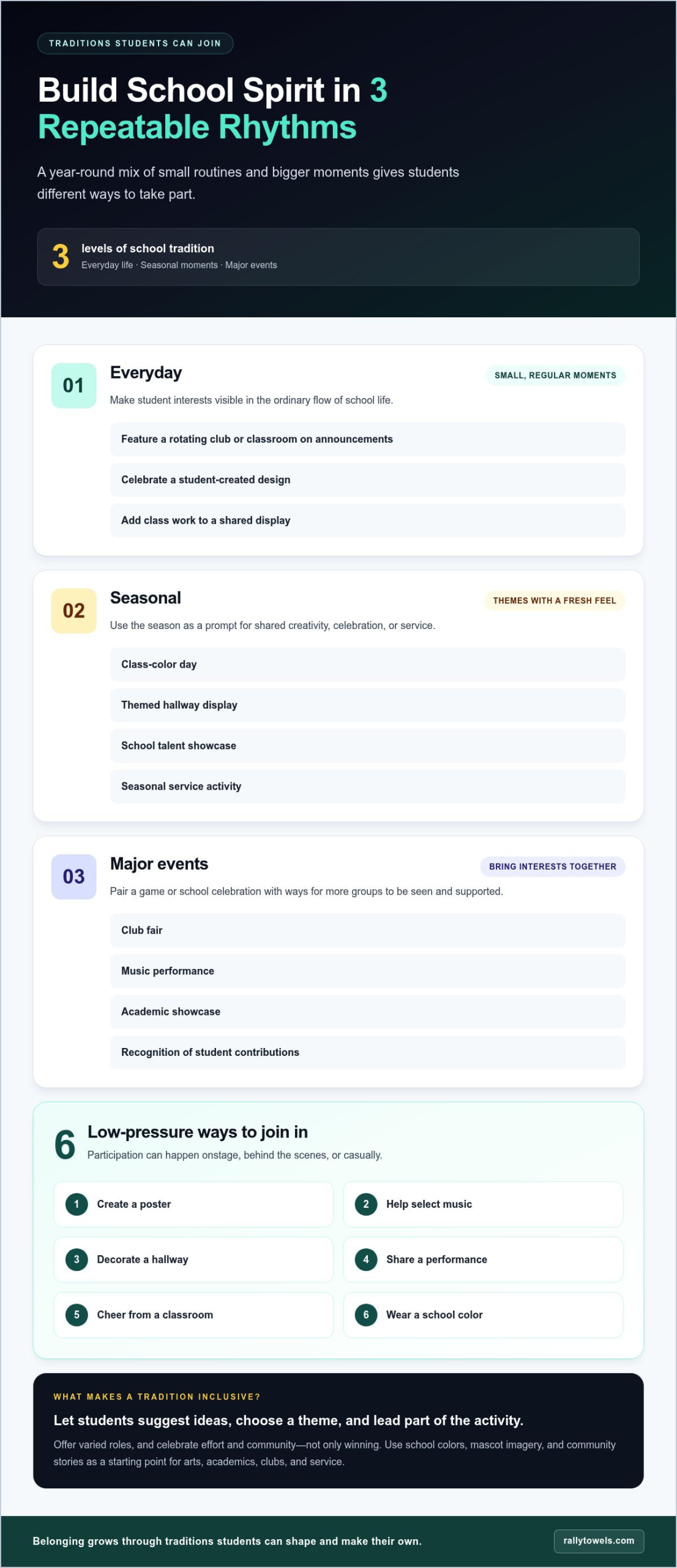
Plan across three levels: everyday school life, seasonal moments, and major events. A simple ritual can build recognition between big celebrations, while student-led themes give each occasion a fresh feel without demanding elaborate production. Invite students to suggest ideas, choose a theme, and lead part of the activity.
- Everyday: Feature a rotating club or classroom on announcements, celebrate a student-created design, or invite classes to add work to a shared display.
- Seasonal: Try a class-color day, a themed hallway display, a school talent showcase, or a service activity connected to the season.
- Major events: Pair a game or school celebration with a club fair, music performance, academic showcase, or recognition of student contributions.
Build in low-pressure ways to take part. A student might create a poster, help select music, decorate a hallway, share a performance, cheer from a classroom, or simply wear a school color. Participation doesn’t have to mean being onstage or in the stands. Clear invitations and varied roles help students find an entry point that suits them.
How can schools make traditions feel inclusive?
Offer more than one way to contribute. Some students enjoy organizing, others prefer creating behind the scenes, performing, competing, or joining casually. Use welcoming language that celebrates effort and community, not only winning. A tradition becomes more meaningful when students can help shape it, repeat it, and recognize their own interests in it.
Use school colors, mascot imagery, and community stories as a starting point, not a limit. Ask students to suggest a theme or ritual that connects those familiar symbols to arts, academics, clubs, or service. Coordinated apparel can also give a shared event a visible identity; custom wholesale T-shirts can carry school colors or a student-developed design.
Keep the format simple enough to repeat. A monthly showcase, rotating hallway theme, or brief recognition moment can become a familiar ritual without requiring a large production team. For a school event, custom promotional giveaways can carry a shared theme into the day. Start with one activity, invite students to shape it, and build from what they’re excited to bring back.
Plan School Spirit Events That Bring More Students Together
A well-planned event makes it easy for students to see where they fit and for organizers to know what happens next. Start with a clear purpose, such as helping students meet people beyond their usual groups or recognizing contributions across campus. Then match the event to the time, space, and volunteers available. A short, well-run activity can bring students together without becoming a major production.
Use this planning sequence to move from idea to follow-up:
- Choose a goal. Decide what students should experience or be able to do. Keep the goal specific enough to guide the event format.
- Invite input. Ask students from different grades and groups what would make the event worth joining. Use their suggestions to shape activities, not just the theme.
- Assign roles. Name a student-adult team and give each person a clear task, such as hosting, communications, setup, or coordinating an activity. Give students meaningful roles before event day.
- Promote the event. Share the purpose, schedule, and ways to participate through school announcements, classroom notices, and club channels. Make clear that students can contribute in more than one way.
- Review what happened. Gather quick feedback from participants and volunteers. Note which activities drew interest, where plans ran into snags, and what to adjust next time.
Check the school calendar before settling on a date. Exams, performances, major games, and other campus activities can compete for students’ time and volunteers. Choose a format that fits the day: a brief lunchtime showcase may work better than a large after-school event when schedules are tight.
How do you organize a school spirit week?
Choose one simple theme rooted in the school community, then vary each day’s activity so participation doesn’t depend on having a costume or being comfortable in a crowd. Pair a school-color day with a trivia prompt, a hallway display, or a student talent feature. Have a student-adult team divide communications, setup, and participation roles. Keep the plan easy to understand and repeat.
How can a pep rally welcome more than athletes?
Build the program around the wider school, not just the scoreboard. Recognize arts performances, clubs, academic teams, service groups, and other student contributions. Invite different students to host, perform, create visuals, or lead a brief activity. A rally can still celebrate a team while making room for the many ways students contribute to campus life.
A coordinated game-day ritual, such as custom rally towels featuring school colors, a logo, slogan, or team name, can give attendees a shared visual cue. Custom rally towels are one way to bring that identity into the event. They are 100% cotton, made in the USA, and measure 11 × 18 inches overall, with a 9 × 14 inches printed area. Orders require a minimum of 25-piece order and include free shipping. Rally Towels’ award-winning customer service department supports customers. Keep the ritual connected to the event’s purpose, then gather feedback to make the next one more welcoming.
Keep School Spirit Growing All Year and Learn What Students Value
School spirit lasts when it becomes part of the school-year rhythm, not just a highlight on the calendar. Balance a few larger celebrations with small, regular moments that recognize students and invite them to contribute. That steady pattern gives students more than one chance to connect, even if they miss a particular event.
Use this quick comparison to decide whether an idea can become a tradition or is best kept as a one-time event:
Recurring tradition: Has a clear purpose, simple steps, and a place in the school calendar. Students can anticipate it, take part in it, and help shape it over time.
Isolated event: Creates a single moment of activity but may not connect to other school experiences or return in a familiar form.
A practical rhythm might include a major welcome event early in the year, brief recognition moments throughout the terms, and a few larger seasonal celebrations. Keep the smaller moments easy to sustain: highlight a student contribution in announcements, invite a club to share a project, or recognize effort after a performance. Consistency matters more than filling every week with activities.
Measure more than head counts. Track participation across grades, clubs, activities, and event types over time, and notice who takes on planning or leadership roles. Student polls, club input, and event observations can reveal what felt welcoming, meaningful, or difficult to join. Attendance is useful, but it doesn’t show whether students felt included, contributed behind the scenes, or would want to return.
How can schools tell whether participation is broadening?
Compare involvement over time by grade, group, and activity, rather than judging success from one popular event. Ask students what made joining easy or difficult, then adjust timing, formats, and leadership opportunities. If the same group leads every activity, invite new voices into planning or offer participation roles that suit different interests and schedules.
What helps traditions survive leadership changes?
Write down each tradition’s purpose, basic steps, timing, and roles so new organizers have a useful starting point. Pair experienced student organizers with new volunteers, then review the plan after each cycle. Keep the shared meaning, but let students refresh themes or activities so a tradition stays relevant instead of becoming an obligation.
As you learn how to build school spirit year-round, use feedback to make small, visible improvements and tell students what changed because of their input. If a recurring game-day moment is part of your plan, explore custom rally towels as one way to make that shared ritual visible.
Use Custom Rally Towels to Make Game-Day School Spirit Visible
Custom rally towels can add a shared visual ritual to a game day, but they’re one part of a wider school-spirit plan. Pair them with a cheer, a team introduction, or a moment when students and supporters raise them together. The school chooses the ritual and gives it meaning. A towel alone won’t build lasting belonging, but it can help make an established tradition recognizable at an event.
Keep the design tied to the school’s identity. A recognizable mascot, school colors, short slogan, or team name can connect the item to traditions students already know. Ask student organizers to choose the design elements and suggest how the towels will be used. That involvement helps make the ritual feel like part of the school community, rather than simply another giveaway.
How can rally towels connect a crowd to school traditions?
Choose a simple moment everyone can understand, such as lifting towels during a school-selected cheer or team entrance. Explain the ritual before the event and invite students to join in their own way. Coordinated towels can also help connect a team with its supporters. For another team-focused perspective, explore custom rally towels.
What should a school include in its rally towel design?
Keep the design clear and recognizable. Prioritize one main visual, such as the mascot, then add school colors, a brief slogan, or the team name. A focused layout makes the school identity easy to recognize at a glance and gives students a shared detail to associate with the ritual.
Custom Rally Towels are 100% cotton, made in the USA, and measure 11 × 18 inches overall, with a 9 × 14 inches printed area. Available design options are:
- Screen Printing
- Embroidery
- Dye Sublimated
- PMS Colors
There is a minimum of 25-piece order, and orders include free shipping. Rally Towels has an award-winning customer service department. Plan the design around the school’s existing identity and the game-day moment where the towels will be used. This keeps the item connected to a real tradition instead of asking it to stand in for one.
As one piece of a broader approach to how to build school spirit, custom rally towels can give students and supporters a visible way to take part in a shared game-day moment. Explore custom rally towels for a school event and consider how a coordinated design can reflect your team’s identity.
Make the Next School Tradition One Students Choose
Start with one small step: invite students to name a moment in the school year they’d like to make more meaningful. Their ideas can guide a ritual that feels relevant now and gives future students something to carry forward. That’s a practical way to turn how to build school spirit into an ongoing commitment, shaped by the people who make up your school community.
If a shared game-day ritual fits your plans, custom rally towels can bring school colors, a mascot, or a team slogan into the moment. Rally Towels supports organizations with an award-winning customer service department and a 40,000 sq ft factory in California, and has served over 15,000 satisfied clients, including NBA, NFL, and MLB organizations.
Explore custom rally towels for your school’s next game-day tradition, then invite students to help make that tradition their own. Build it together, keep listening, and give school pride room to grow.
Frequently Asked Questions
How can a school build spirit without focusing only on sports?
A school can build spirit by making shared pride visible across academics, arts, clubs, service, and athletics. For example, recognize a student research project alongside a performance or team achievement, so schoolwide praise reflects different strengths. Invite students from varied groups to help choose what gets celebrated and how. Sports can be a lively expression of community, but belonging also grows through everyday opportunities to contribute and be recognized.
What are some simple school spirit ideas students can help organize?
Students can organize themed days, club showcases, short performances, peer-recognition moments, or a shared cheer for morning announcements. Keep the format adaptable: a showcase might fit a lunch period, while a themed day could need only a prompt and school announcements. Let students propose ideas, choose roles, and adjust plans around the school calendar. Starting with a manageable activity makes it easier to learn what the community enjoys.
How do you get students interested in school spirit activities?
Ask students what they’d enjoy before setting the plan, then offer several ways to participate, such as making a design, helping behind the scenes, or joining an activity. Give students visible ownership by letting them select themes or lead a portion of the event. Keep participation optional and avoid implying that enthusiasm must look the same for everyone. Afterward, a brief poll can show which parts students would repeat or change.
Can school spirit activities include students who do not attend games?
Yes. Students can connect with school life through class projects, club events, performances, service activities, themed days, and recognition outside athletic events. Share invitations through familiar channels, such as classroom announcements or club messages, so students can find an option that fits their routine. A student might contribute to a display during the school day or help with a club activity without attending a game. Belonging has many settings.
How can a school keep spirit activities going throughout the year?
Set a realistic calendar that includes recurring traditions, brief recognition moments, and a few larger events. Give each activity an owner and keep a simple planning note with its purpose, materials, and next steps. Invite incoming student leaders to shadow current organizers before taking over. After each activity, record one thing to keep and one change to try. This creates continuity while leaving room for new students to make traditions their own.
How can schools measure whether school spirit is improving?
Look for patterns across grades, clubs, and activity types, including whether students return or new groups join. Pair attendance notes with brief comments about what made participation comfortable or challenging. For example, a well-attended event may still offer few meaningful roles to students outside the organizing group. Compare observations over time, then adjust the format or outreach. No single event proves that belonging has changed; consistent signals offer a more useful picture.
What can a school use to create a shared game-day tradition?
A school can establish a recognizable cheer, visual theme, student-led moment, or coordinated item for a game. Custom rally towels are one option. Rally towels are 100% cotton, made in the USA, and measure 11 × 18 inches overall, with a 9 × 14 inches printed area. There is a minimum of 25-piece order, and orders include free shipping. Rally Towels has an award-winning customer service department. A coordinated item can mark a ritual, but students and shared meaning make it a tradition.