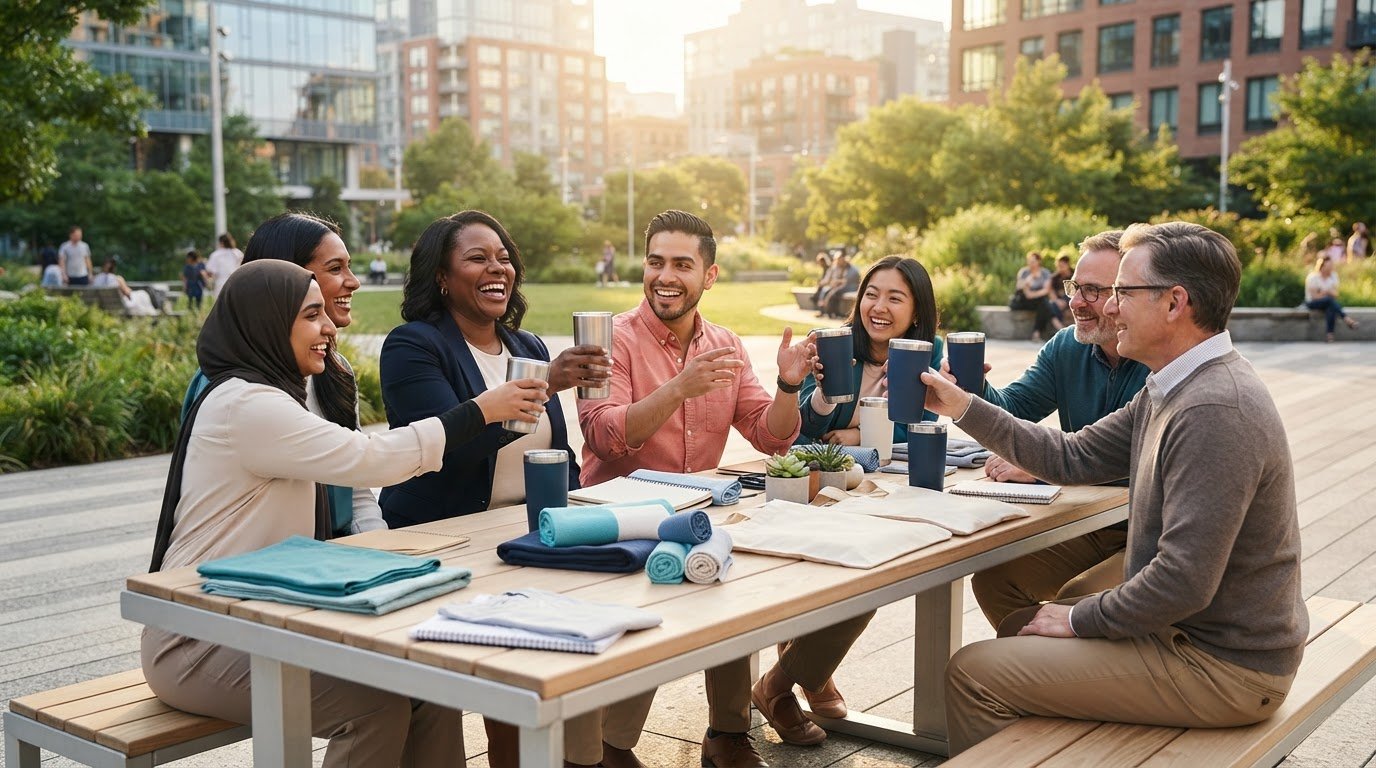
The best team swag isn’t necessarily the item with the biggest logo. It’s the one that gives people a reason to share a moment. Choosing promotional items to build team culture can feel tricky when a team includes different roles and work settings. Nobody wants branded gear that gets ignored or tossed aside.
That’s why the purpose matters as much as the product. A useful item can support a team ritual, make an event feel more inclusive, or give remote and in-person colleagues a shared touchpoint. It won’t create culture on its own, but it can help make team values and shared experiences more visible.
In this guide, you’ll compare 12 practical ideas by the team behaviors they support, from cheering together to taking a break as a group. You’ll also learn how to match an item to where your team gathers, keep branding authentic, and plan a bulk order around a clear purpose and distribution approach. Start with the moment you want to create, then choose an item people can use and enjoy together.
Key Takeaways
- Choose promotional items to build team culture around a shared activity or moment, not the logo alone.
- Compare options by practical use, team setting, recipient preferences, and distribution plan.
- Explore 12 ideas, including custom rally towels, beach towels, cooling towels, and T-shirts, for different team moments.
- Use a simple planning sequence: define the moment, identify recipients, choose the item, confirm the design, and plan distribution.
- Give the item meaning through a team ritual, then ask for feedback to find out whether it suits how people actually gather and work.
Promotional Items to Build Team Culture Start With a Shared Purpose
A branded giveaway can’t replace supportive leadership, trust, or clear team communication. An item alone won’t create belonging or make people feel recognized. But promotional items to build team culture can give a shared value or activity a useful, visible reminder when chosen with care.
Think of culture-supporting merchandise as a prompt for shared identity, rituals, or experiences. A towel handed out before a tournament, for example, can become part of cheering together. A team shirt given during onboarding can help a new colleague feel included in a shared tradition. Promotional merchandise has long served marketing and brand-awareness goals. A team-focused choice adds meaning through the moment and use connected to it.
For a quick look at popular promotional product categories, watch this video:

What makes a promotional item feel connected to a team?
Start with a real team moment, not a product category. Is the item for onboarding, a tournament, a project milestone, or a group celebration? The answer helps narrow the choices to items that fit what people will actually do together. A useful item with a clear purpose is more likely to feel relevant than an object selected mainly because it has space for a logo.
Merchandise can support culture when teams give it a meaningful use. Make that use clear: invite everyone to wear the shirts at a shared event, or distribute rally towels as part of a team’s cheering tradition. The item can reinforce an existing value or activity, but it can’t stand in for one or promise better engagement, morale, or retention on its own.
Which team culture goal should the item support?
Name the audience and intended moment before comparing options. Are you welcoming new people, recognizing a milestone, encouraging event participation, or creating everyday team visibility? Each goal points to different practical needs. An event item should suit the activity and setting, while a recognition gift should feel appropriate to the people receiving it.
- Belonging: Give the team a shared marker for a welcome or group activity.
- Recognition: Connect the item to a specific contribution or milestone.
- Participation: Choose something people can use during the event itself.
- Visibility: Consider whether the item fits regular team activities and settings.
Keep the goal specific. A clear purpose makes it easier to compare options and choose something people can use and enjoy together.
How to Compare Promotional Items for Usefulness, Inclusion, and Team Fit
A useful comparison starts with the team’s actual routine. Ask what people will do with the item, where they’ll use it, and how they’ll receive it. An item that fits a tournament may not suit a remote team or an everyday office setting. Treat merchandise as a practical choice, not a shortcut to measurable culture or engagement outcomes.
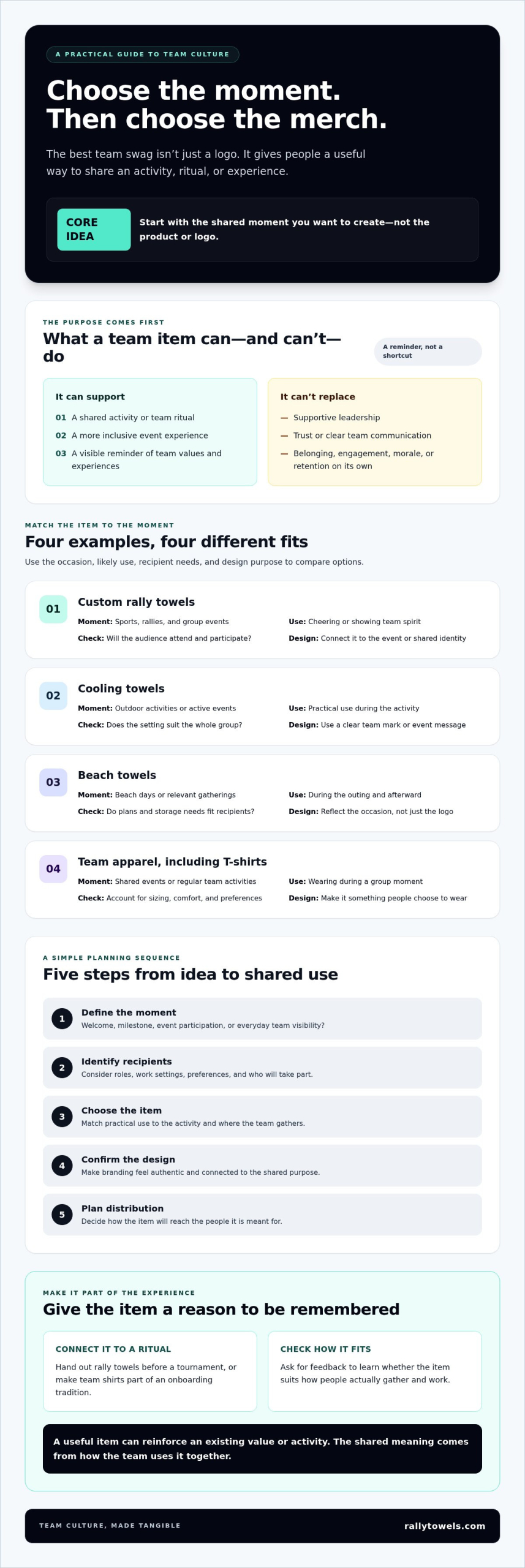
Use this framework to compare options before choosing promotional items to build team culture:
| Item | Best-fit moment | Likely use | Inclusion consideration | Branding opportunity |
|---|---|---|---|---|
| Custom rally towels | Sports, rallies, and group events | Cheering or showing team spirit | Check whether the audience will attend and participate | Connect the design to the event or shared identity |
| Cooling towels | Outdoor activities or active events | Practical use during the activity | Consider whether the setting and activity suit the whole group | Use a clear team mark or event message |
| Beach towels | Beach days or other relevant gatherings | Use during the outing and afterward | Check that the item fits recipients’ plans and storage needs | Reflect the occasion without relying on a logo alone |
| Team apparel | Shared events or regular team activities | Wear during a group moment | Account for sizing, comfort, and personal preferences | Use a design people can choose to wear with pride |
Does the team need an event item or something for regular use?
Event-focused items make sense when people gather in person and can use them together. Custom rally towels may fit sports, rallies, and group events. See the custom rally towel options for more product-specific context. For items intended for work, practice, or travel, ask whether people will realistically use and carry them after the event.
Check logistics before ordering. Will people collect the item at a venue, receive it at the office, or need it sent to different locations? Think through storage and distribution, too, especially for a bulk order.
How can branded merchandise feel inclusive rather than generic?
Ask the group about practical needs and preferences before settling on one format. For apparel, consider sizing and whether recipients want to wear a shared design. A non-apparel option avoids sizing, but it still needs to suit the team’s activities, access needs, and setting. Remote colleagues may also need a different distribution plan from people attending an event.
Keep the branding tied to a shared identity without assuming everyone wants the same look or use. If towels suit the occasion, explore branded towel options as one possibility, then check that the item fits the audience and moment.
12 Promotional Item Ideas, Matched to Different Team Moments
The strongest promotional items to build team culture fit the moment people will share. These ideas are grouped by team activity, not ranked universally. The towel and apparel options are confirmed categories; the other items are general examples of promotional merchandise, not products attributed to Rally Towels. For each idea, consider whether recipients will use it and what might make it unsuitable.
For team events, recognition, and shared milestones
- Custom rally towels: A fit for sporting events, team gatherings, or coordinated cheering. Check whether recipients will attend and have a chance to use them. See these custom rally towels for one event-focused option.
- Custom T-shirts: Useful for team events where people want to wear a shared identity. Check sizing, comfort preferences, and whether the activity suits apparel.
- Custom notebooks, general example: Consider for a project kickoff or milestone where people will take notes together. Some team members may prefer digital tools.
- Branded drinkware, general example: A possible choice for an office gathering or recognition moment. Check whether recipients will need to carry or store it.
For outdoor, sports, or active teams
- Custom beach towels: Consider for beach outings or team gatherings where a larger towel suits the setting. Check whether recipients are likely to use and store one.
- Custom cooling towels: A possible fit for active or outdoor events. Confirm the intended use and product details with the supplier before ordering.
- Custom sports towels: Match the towel to the sport and how the team plans to use it. Ask the supplier about available designs and printing options, and confirm product-specific details before placing an order.
- Branded caps, general example: May suit an outdoor team event. Consider fit, style preferences, and whether people will want to wear them.
Rally towels, beach towels, and cooling towels suit different occasions. Choose based on the setting and intended use, rather than assuming one towel category works for every team.
For onboarding, remote teams, and everyday connection
- Branded tote bags, general example: Could help carry materials at an in-person welcome or event. Check whether recipients have a use for another bag.
- Desk accessories, general example: May suit an office-based welcome or work milestone. They may be less useful to people without a dedicated workspace.
- Stickers, general example: A lightweight option for an event or welcome pack. Personal preference matters, and not everyone uses stickers.
- Branded blankets, general example: Could mark a remote-team celebration or milestone. Consider storage, shipping, and whether recipients would welcome one.
Before settling on a design, confirm artwork, printing choices, and product details with the supplier. Matching the item to the audience and moment gives the giveaway a clear role without asking it to create team connection on its own.
Matching Promo Items to Remote, Office, and Event Teams
The right item depends on where the team gathers and how recipients will get it. Plan the rollout before choosing a product. This five-step sequence helps you compare promotional items to build team culture while accounting for the shared moment and practical details:
- Define the moment. Is the item for onboarding, a team milestone, a sporting event, or regular team activity?
- Identify recipients. Note who’s included, where they’re based, and any preferences or access needs to check.
- Choose the item. Match it to the activity, setting, and likely use.
- Confirm the design. Check artwork, branding, and any product-specific design requirements with the supplier.
- Plan distribution. Decide how items will reach recipients and when they’ll receive them.
What should remote and hybrid teams consider before ordering?
For a distributed team, confirm whether each person can receive the item at their location and whether the product suits how they work. A shared activity, such as an online welcome or an in-person team gathering, can give the item context. Mailing branded merchandise doesn’t automatically create connection or inclusion. Check shipping arrangements, recipient details, quantities, and timing with the supplier before setting expectations.
Hybrid teams may need more than one distribution plan. Some people might collect items at the office, while others need them delivered. Make sure remote participants aren’t left out of the moment the item is meant to support.
What should an in-person team or event organizer plan?
Estimate the number of recipients, then choose a practical distribution point, such as onboarding, a team gathering, or event check-in. For a sports team or event, consider whether people will use the item during the activity. In an office, think about storage and whether recipients can take it home easily.
Before confirming the order, ask the supplier about product options, artwork requirements, quantities, and timing. Don’t promise a delivery date until details are confirmed. If apparel suits the audience and activity, review the custom wholesale T-shirts page as part of your product research. Confirm sizing and other relevant details before choosing.
For a bulk order tied to a team event or shared moment, ask Rally Towels about custom team merchandise and confirm the requirements for your project.
Turn a Promotional Item Into a Team Ritual, Not a One-Off Giveaway
A thoughtful item can support a team tradition, but the meaning comes from what people do with it. Connect distribution to a real moment, such as welcoming a new colleague, recognizing a milestone, or gathering before a game. That context helps the item feel intentional rather than like another giveaway. Customized merchandise can make a shared identity visible, but only if the item is useful and recipients welcome it.
How can a team introduce branded items with purpose?
Explain the reason for the choice in a short, specific message. Connect the item to a team value, the event it’s for, or the contribution being recognized. Then give people room to participate in their own way. Wearing or displaying branded merchandise should be an invitation, not a requirement.
- For recognition: Name the contribution or milestone the item marks.
- For a shared activity: Explain how the item fits the gathering or event.
- For onboarding: Tie it to a welcome tradition and the team’s shared identity.
A little context can make promotional items to build team culture feel more connected to the people and moment they’re meant to represent.
How should buyers assess whether the choice worked?
Pay attention to use, not just distribution. Ask recipients whether the item was useful, appropriate, and relevant to the moment. For a team event, ask whether it suited the activity. For a welcome item, find out whether it felt thoughtful and practical. Feedback can guide a future order, but it shouldn’t be treated as proof of a measurable change in team culture.
- Did people have a clear opportunity to use or enjoy the item?
- Did the design feel appropriate to the group and occasion?
- What would recipients change about the item or how it was shared?
Use responses to refine your next choice. Before ordering, confirm the final product details, customization options, artwork requirements, quantities, and timing directly with the supplier. That check helps set realistic expectations and keeps the item aligned with its intended use.
Planning a bulk order for a team gathering, recognition moment, or event? Contact Rally Towels about a wholesale order and confirm the details for your project.
Choose a Team Item With a Purpose
The best promotional items to build team culture connect a useful product to a real team moment. Start with the audience and activity, then consider preferences, accessibility, and distribution. A branded item can support shared identity or a team ritual, but lasting culture still depends on how people work and communicate together.
Make the choice practical. Custom rally towels can suit sporting events and group gatherings, while beach towels, cooling towels, or T-shirts may fit other settings and activities. Rally Towels serves clients ranging from athletic booster clubs to major sports leagues and Fortune 500 companies, with wholesale options that include these custom items. Confirm product details, artwork, quantities, and timing before planning the rollout.
Ready to match a custom item to your team’s next event or shared moment? Contact Rally Towels to plan custom merchandise for your team. Choose with care, invite people to take part, and give your next team tradition a thoughtful start.
Frequently Asked Questions
Can promotional items really build team culture?
Promotional items can support team culture, but they can’t create it on their own. The most effective promotional items to build team culture connect to a shared value, event, recognition moment, or welcome tradition. Choose something useful, explain why the team is receiving it, and keep participation optional. Trust, supportive leadership, and communication remain the foundation. A branded item can reinforce a meaningful experience, but it can’t replace one.
What are the best promotional items for team building?
The best choice depends on the group and the moment. Custom rally towels can suit a sports event or team gathering, while beach towels or cooling towels may fit an outing or outdoor activity. Apparel can work for a shared event if it suits the audience. Consider general promotional categories such as notebooks or drinkware, too, but check whether people will use and welcome them before ordering.
How do you choose promotional items employees will actually use?
Start by asking what employees do, where they work, and what they would find useful. Match the item to a real activity rather than choosing it just because it carries a logo. Check practical details such as storage, sizing, accessibility, and how people will receive it. If preferences vary, ask the group for input or consider whether a non-apparel option better suits the team.
Are custom T-shirts a good choice for team culture?
Custom T-shirts can work well when a team wants a wearable reminder of a shared event, identity, or milestone. They’re not right for every group or occasion. Consider sizing, comfort, design preferences, and whether people would choose to wear the shirt after the event. Avoid making it compulsory. For a mixed team, ask recipients what they’d wear or compare apparel with a useful non-apparel item.
Are promotional towels useful for employee or sports teams?
They can be, if they fit the activity. Custom rally towels may suit cheering at games or team gatherings; beach towels can fit outings, and cooling towels may be considered for outdoor or active events. Think about how the item will be used, who will receive it, and whether it’s practical to carry or store. Confirm product details and intended use with the supplier before ordering.
How can remote teams use promotional items to feel more connected?
Choose an item that can reach people in different locations, then connect it to a shared moment, such as a virtual welcome or team activity. Confirm recipient details, shipping arrangements, and distribution timing before placing an order. Invite people to take part, but don’t assume a mailed item will automatically create connection or inclusion. Ask recipients afterward whether it felt relevant and useful to them.
When should a company order promotional items for a team event?
Plan early enough to confirm the product, artwork, quantities, and distribution arrangements before the event. The right lead time depends on the item and supplier, so ask directly about current production and delivery timing rather than relying on assumptions. Build your event plan around details the supplier has confirmed. If the design or recipient count changes, check whether that affects the order schedule.