
Could one hot wash dull the artwork on a towel you rely on for game day, events, or everyday use? If you’re wondering how to wash dye sublimated towels without harming the print, start with the care label and keep heat, friction, and harsh laundry products in check.
It’s reasonable to worry that sweat, dirt, and stains will call for stronger cleaning, or that regular washing will fade the design. The good news is that a simple, repeatable routine can help protect both the towel and its printed artwork. Because towel materials and construction can vary, the care label should guide your settings.
This guide shows you how to choose a safe water temperature, detergent, and wash cycle, then dry the towel with less risk of heat or sun damage. You’ll also learn how to treat stains and odors gently, what products to avoid, and how to handle care-label limitations. Use these practical steps to keep custom and event towels ready for their next outing.
Key Takeaways
- For how to wash dye sublimated towels, let the towel’s care label guide your settings because print method alone doesn’t determine its care needs.
- Before washing, inspect the towel, sort it with similar colors and compatible fabrics, and treat visible spots gently.
- Use a suitable cycle and only as much detergent as needed to clean the towel.
- Choose air-drying or a lower-heat machine setting when the label permits to avoid unnecessary stress on the fabric and print.
- For lingering stains or odors, use a cautious treatment and focus on a thorough wash and complete drying rather than adding extra detergent.
How Dye Sublimation Affects Towel Care
Understanding the print helps explain why care matters, but it doesn’t give every towel the same wash instructions. Dye sublimation transfers color into compatible fibers using heat, rather than leaving a separate graphic layer on top. That difference can affect how the design looks and feels, but the towel’s materials and construction still determine the safest care routine.
What makes a towel dye-sublimated?
Dye sublimation is a heat-transfer printing process that moves colorant into compatible fibers, so the design becomes part of the printed textile rather than a layer sitting on its surface. In the process, solid dye turns into gas and enters the fibers. The Dye-sublimation printer reference explains this basic transfer process.
Because the color is infused into the fibers, the print doesn’t form a surface film in the same way some other graphics do. That doesn’t make it immune to wear. Repeated friction, harsh cleaning products, sunlight, and excessive heat can still affect the towel or its design. The material must also be compatible with the process, so a print method alone doesn’t tell you the full fiber content.
That distinction is useful when learning how to wash dye sublimated towels: care should protect the whole textile, not just the visible artwork. A towel may have a printed face alongside other materials or finished edges, and those parts can have different care needs.
Why the care label still matters
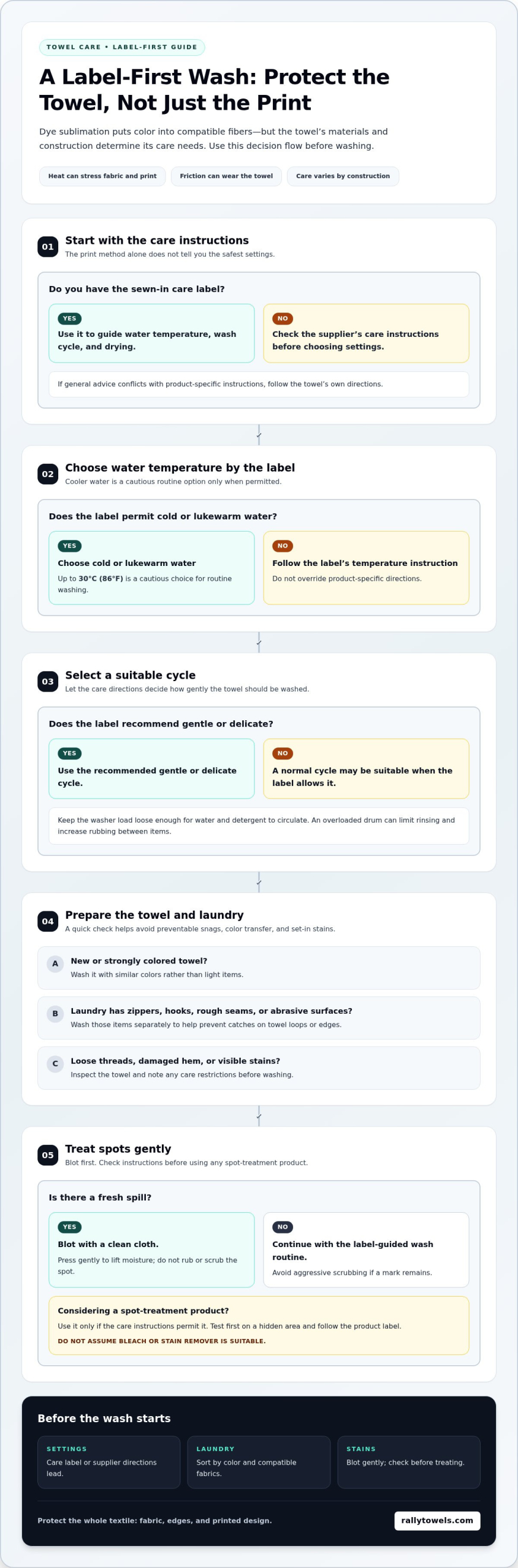
Start with the sewn-in label, or the supplier’s care instructions if the label is missing. Follow those directions for water temperature, wash cycle, and drying. Don’t assume all sublimated towels can handle the same settings. The label reflects the specific towel, while the print method describes only how its design was applied.
Fiber content is one reason recommendations can vary. A towel’s face, backing, border, binding, or edging may use different materials or finishes. These details can affect how the item responds to washing and heat. For example, instructions for a towel with a blended construction may differ from those for one made with a single compatible fiber. Don’t infer the full construction just by looking at the printed design.
Custom dye-sublimated towels can be made with different towel constructions, so treat each item according to its own directions. If care instructions conflict with general advice, follow the product-specific instructions. That simple check gives you a practical starting point before you sort laundry or choose a cycle.
Prepare Dye-Sublimated Towels Before the First Wash
A few minutes of preparation can help prevent avoidable snags, color transfer, and set-in stains. Before loading the washer, check the towel’s care instructions, look over its fabric and seams, sort it with compatible laundry, and deal gently with any visible spots. Read the label, inspect the towel, sort like colors with compatible fabrics, and blot visible spots before washing.
Sort and inspect the towel
Start with the sewn-in label or supplier care instructions. The FTC Care Labeling Rule explains the role of care instructions on covered textile products. Check the towel for loose threads, a damaged hem, or stains that need attention, and note any restrictions before choosing wash settings.
Next, separate laundry by color and fabric. Keep a new or strongly colored towel with similar colors, rather than mixing it with light items. Choose compatible fabrics, too. Items with zippers, hooks, rough seams, or abrasive surfaces can catch on towel loops or edges, so wash those separately. This quick sort is especially useful for custom and event towels that may be laundered alongside mixed gear.
Pre-treat spots without harsh scrubbing
For a fresh spill, use a clean cloth to blot the area. Press gently to lift moisture instead of rubbing the spot deeper into the fibers or roughing up the fabric. If the care instructions permit a spot-treatment product, test it first on a hidden area and follow the product label. Don’t apply bleach or a stain remover by assumption; check both sets of instructions before treating the towel.
A damp, dirty towel shouldn’t sit crumpled for a long stretch before laundering. Spread it out to air until you can wash it, rather than leaving it bundled in a gym bag or laundry pile. This gives the fabric a chance to dry instead of staying compressed and wet. If a spot remains after blotting, avoid aggressive scrubbing; the next section covers the wash routine that can clean the towel while respecting its care directions.
These steps create a practical starting point for how to wash dye sublimated towels, whether the towel is used for a game, event, or promotion. For branded event planning, you can also explore custom rally towels as a personalized giveaway option.
Wash Dye-Sublimated Towels Gently and Consistently
A reliable wash routine doesn’t need complicated settings. Start with the towel’s care label, then choose a suitable cycle and use detergent sparingly. Dye-sublimated towels can differ in fiber content and construction, so treat general guidance as a starting point, not a substitute for product-specific instructions.
Choose the cycle and water temperature
Check the label before selecting a temperature. If it permits, cold or lukewarm water, up to 30°C (86°F), is a cautious choice for routine washing. Cooler water can reduce unnecessary heat exposure, but don’t override a towel’s specific instructions. Select a gentle or delicate cycle if recommended; a normal cycle may be suitable when the label allows it.
Keep the washer load loose enough for water and detergent to circulate around the towel. An overloaded drum can limit rinsing and increase rubbing between items. An aggressive cycle may also add avoidable friction to the fabric and printed design. For general textile-care education, the Association for Linen Management (ALM) promotes knowledge and best practices in textile care.
General wash-settings guide, only where the care label permits:
- Water: Cold or lukewarm, up to 30°C (86°F).
- Cycle: Gentle or delicate; use a normal cycle only if the instructions allow it.
- Load: Avoid packing the washer tightly so the towel can move freely.
- Detergent: Mild liquid detergent, measured according to its label and the load size.
Use detergent carefully
More detergent doesn’t necessarily mean a cleaner towel. Measure the amount for the load and product directions rather than adding an extra dose. Too much can leave residue that affects how the towel feels or rinses. Choose a mild liquid detergent, and avoid detergents with bleach or optical brighteners, which can be harsh on dyes and fibers.
Skip fabric softener. It can leave a coating on the textile and affect its feel or performance. Don’t combine softener, stain products, or other laundry additives unless both the towel-care directions and each product label allow the combination. If you pre-treated a spot, follow that product’s directions and avoid adding another treatment simply for extra strength.
For how to wash dye sublimated towels, keep the routine steady: follow the label, use permitted cooler water and a suitable cycle, and measure a mild detergent. These choices limit unnecessary heat, friction, and product buildup without assuming every towel has identical care needs.
Dry and Store Towels Without Unnecessary Heat
Drying is the next chance to protect a towel’s fabric and printed design. Check its care label before choosing a method: air-drying is a low-heat option when permitted, while a machine dryer may be suitable if the instructions allow it. No single method fits every towel construction, so use the label as your guide and avoid prolonged high heat.
Air-drying or using a dryer
To air-dry, hang the towel open or lay it flat in a well-ventilated place, away from prolonged direct sunlight. This avoids dryer heat, though the towel still needs enough airflow and time to dry fully. If machine drying is allowed, use a low-heat or no-heat setting when consistent with the label, and remove the towel promptly once dry.
Choose the option that matches the towel’s instructions:
- Air-drying: Minimizes heat exposure. Allow space around the towel so air can circulate, and follow any label restrictions.
- Low-heat or no-heat tumble drying: Can be convenient when machine drying is permitted. Use the label’s setting, and avoid leaving the towel in the dryer after the cycle ends.
- High-heat drying: Can place avoidable stress on textile fibers and printed designs. Don’t use it unless the towel’s care instructions specifically allow it.
Heat matters because a dryer can expose fabric to more warmth than needed, especially if a cycle continues after the towel is dry. That extra exposure may affect fibers and the printed design over time. If you’re unsure which setting applies, don’t guess based on the print alone. The towel’s materials and construction matter too.
Prevent damp storage and avoidable wear
After use, hang the towel open so moisture can escape instead of leaving it folded or crumpled in a bag. Before putting it away, check that it’s fully dry, including thicker seams and edges. Storing a damp towel can encourage stale odors. Keep clean, dry towels separate from rough items that could snag or abrade the fabric.
Make the finish part of a consistent routine: remove the towel promptly from the dryer if you use one, spread it out to finish drying if needed, then store it only when dry. This is especially practical for custom rally towels used at events, where a towel may be packed away soon after use. A quick check before storage helps catch lingering dampness.
Good drying completes how to wash dye sublimated towels with less unnecessary heat and wear. If you’re planning personalized towels for an event, explore custom towel options from Rally Towels.
Troubleshoot Stains, Odors, and Care Mistakes
A stain that survives washing, a lingering smell, or an unexpected change in the print can be frustrating. Don’t respond by immediately adding more detergent or reaching for a stronger treatment. Check the towel’s care instructions first, then make one cautious change at a time. The right next step depends on the stain, the fabric, and the product directions.
What to do when a stain remains
Identify the stain if you can, since treatment directions vary by product and stain type. Check the towel’s care label and the treatment’s instructions before applying anything. If the product is permitted, test it on an inconspicuous area first. Blot gently rather than scrubbing, and avoid bleach or other unapproved treatments that could affect the textile or printed area.
If the product directions and care label allow it, wash the towel again using the recommended routine. Before machine-drying, inspect the spot while the towel is still damp. Heat may make some stains harder to treat, so don’t put the towel in the dryer until you’ve checked the care directions and decided whether another treatment is appropriate.
When a towel smells or looks different after washing
A lingering odor may come from incomplete drying, detergent residue, or storing the towel while damp. Check these basics before changing your wash routine: make sure the towel dried fully, review how much detergent you used, and consider whether it was put away before moisture had escaped. A thorough wash followed by complete drying may help; extra detergent isn’t automatically the answer.
If the fabric feels coated, review the detergent amount and product instructions. If the print or fabric looks different, stop trying harsher treatments. Check the towel’s care instructions before washing or drying it again, and avoid assuming the change can be reversed. Accidental high heat can stress textile fibers and printed designs. Let the towel cool, inspect it, and follow its specific care directions for any next wash. No cleaning step can guarantee that heat-related changes will disappear.
For event and team towels, choosing a construction suited to the intended use is part of setting up a practical care routine. The custom rally towel options can help you explore towels for fan and event use. Once you have a towel, follow its own care instructions and keep the routine consistent.
That’s the core of how to wash dye sublimated towels: treat problems gently, check the label before changing products or settings, and give the towel time to dry completely. Small, careful adjustments are a better first move than escalating to aggressive cleaning.
Put Your Towel Care Routine Into Practice
Make the care label your first reference each time a towel needs washing. That simple habit helps you adjust your routine to the towel’s actual construction instead of relying on assumptions about the print. Now you know how to wash dye sublimated towels with care, respond thoughtfully to stains or odors, and choose drying and storage habits that support repeated use.
Care starts with choosing a towel that fits its purpose, too. Rally Towels offers dye-sublimated towels and makes custom towels for athletic, promotional, and event uses. Consider how and where your towels will be used when planning a personalized design for your team, campaign, or gathering.
Explore dye-sublimated towels and find a custom option that suits your next event. With the right towel and a consistent care routine, you’re ready to keep your artwork looking its best through every use.
Frequently Asked Questions
Can you put dye-sublimated towels in the washing machine?
Yes, machine washing is generally suitable if the towel’s care label permits it. Follow the listed temperature and cycle instead of assuming every towel can take the same treatment. Check the label before the first wash, especially if the towel has a blended fabric, a special backing, or finished edges. If care instructions aren’t sewn in, use the supplier’s directions rather than guessing from the printed design.
What temperature should you wash dye-sublimated towels at?
Use the temperature stated on the towel’s care label. Cooler water can be a cautious choice if the instructions allow it, but there isn’t one setting that fits every towel construction. For example, a towel with a specific temperature limit should be washed within that limit, even if another sublimated towel has different directions. Avoid choosing a hotter setting just because a towel has a stubborn mark.
Can dye-sublimated towels go in the dryer?
They can go in the dryer only if the towel’s care instructions allow machine drying. Check the label for any heat limits and follow them closely. Air-drying is another option when permitted, particularly if you want to avoid added dryer heat. Don’t use a high-heat setting unless the directions specifically allow it. If the towel comes out slightly damp, let it finish drying before folding or putting it away.
Will washing make a dye-sublimated towel fade?
Washing doesn’t automatically make a dye-sublimated towel fade, but sublimation doesn’t make a textile immune to wear. The color is transferred into compatible fibers, while the towel’s construction and care habits influence how it holds up over time. Repeated friction, excessive heat, harsh products, and strong sunlight can affect the fabric or design. Follow the individual towel’s care directions rather than assuming the print method guarantees permanent color.
Can you use fabric softener on sublimated towels?
Check the towel’s care label before using fabric softener. Softener can leave residue that changes a towel’s feel or affects how it performs, so don’t use it if the directions prohibit it. If the label doesn’t clearly address softener, consider skipping it rather than adding it automatically. Use the detergent amount specified for your load, and avoid combining softener with other laundry additives unless their labels allow it.
How do you remove stains from a dye-sublimated towel?
Blot a fresh stain gently with a clean cloth, then check the towel’s care instructions before applying a spot treatment. Follow the treatment product’s directions and test it on a hidden area if permitted. Don’t scrub hard or use bleach without confirming it’s safe for the towel. Before putting the towel in a dryer, check whether the stain remains, since heat may make some stains harder to treat.
What happens if a dye-sublimated towel is washed in hot water?
The result depends on the towel’s fibers, construction, and care instructions. After an accidental hot wash, inspect the towel once it’s cool and dry for changes in texture, shape, or print appearance. Don’t repeat the high-heat wash or try stronger products to correct a change. Use the care label to guide future washes. Any effect from heat may not be reversible, so avoid assuming another wash will restore the towel.