
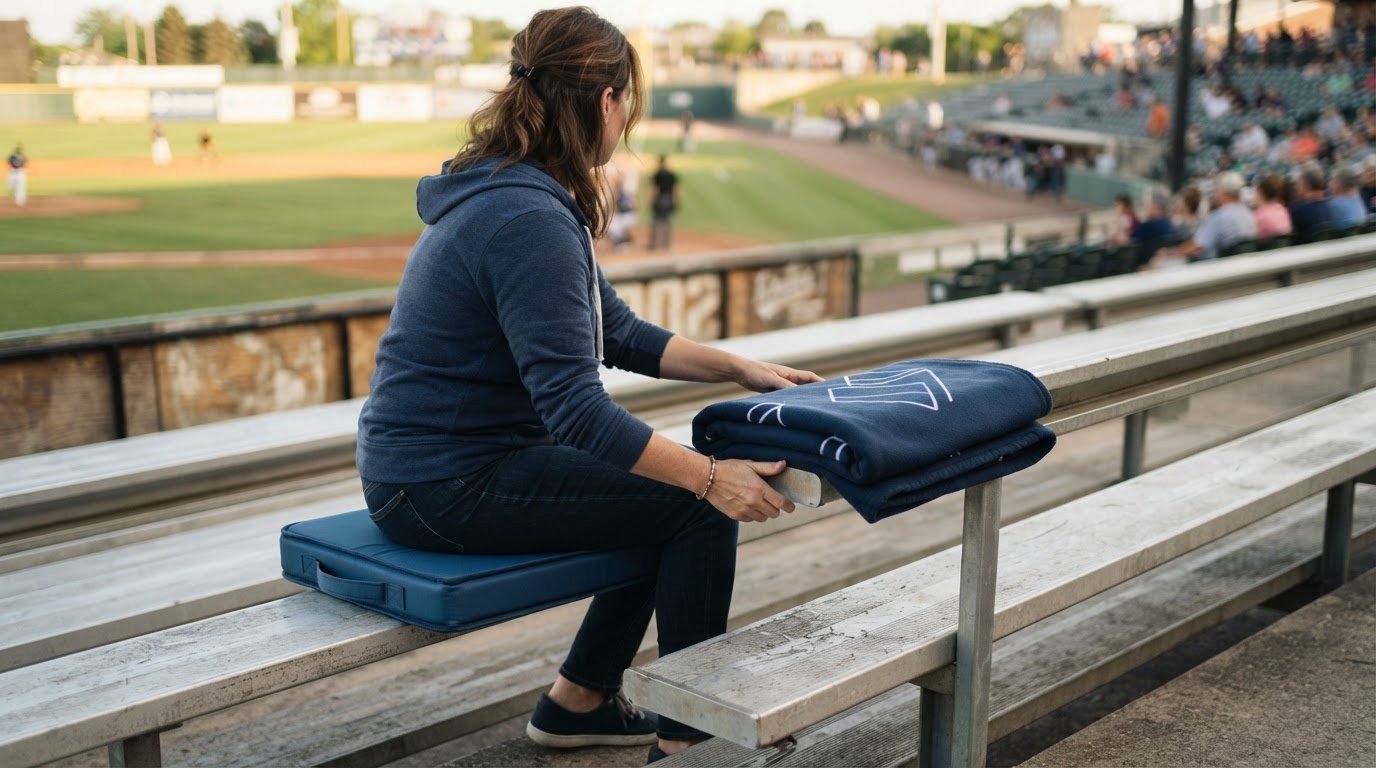
A well-designed cushion gives fans a comfortable place to sit and puts a team or event identity in clear view. Stadium seat cushions with logo artwork or custom text can carry a design that feels distinctly yours. Get a free quote for your event.
Choosing the right decoration starts with a clear design and artwork that’s ready to submit. This guide explains how to customize a cushion with a logo, text, or both, and what to consider when preparing artwork for printing.
You’ll also learn how to coordinate the design with custom stadium fleece blankets for a consistent look in the stands. From choosing what to feature to preparing your artwork, these practical steps help bring the idea together.
Key Takeaways
- Compare cushion materials by durability and comfort; 600D polyester is described as more durable than 200D polyester.
- Measure the seating area before choosing a cushion so its dimensions suit the space and are practical to carry.
- Prepare clear artwork and decide whether the design should feature a logo, text, or both.
- Coordinate the look with custom stadium fleece blankets, available in lap, stadium, and plush sizes.
- Consider how a cohesive branded giveaway can help bring a team or event identity into the stands.
Which materials are best for durable, comfortable stadium seat cushions?
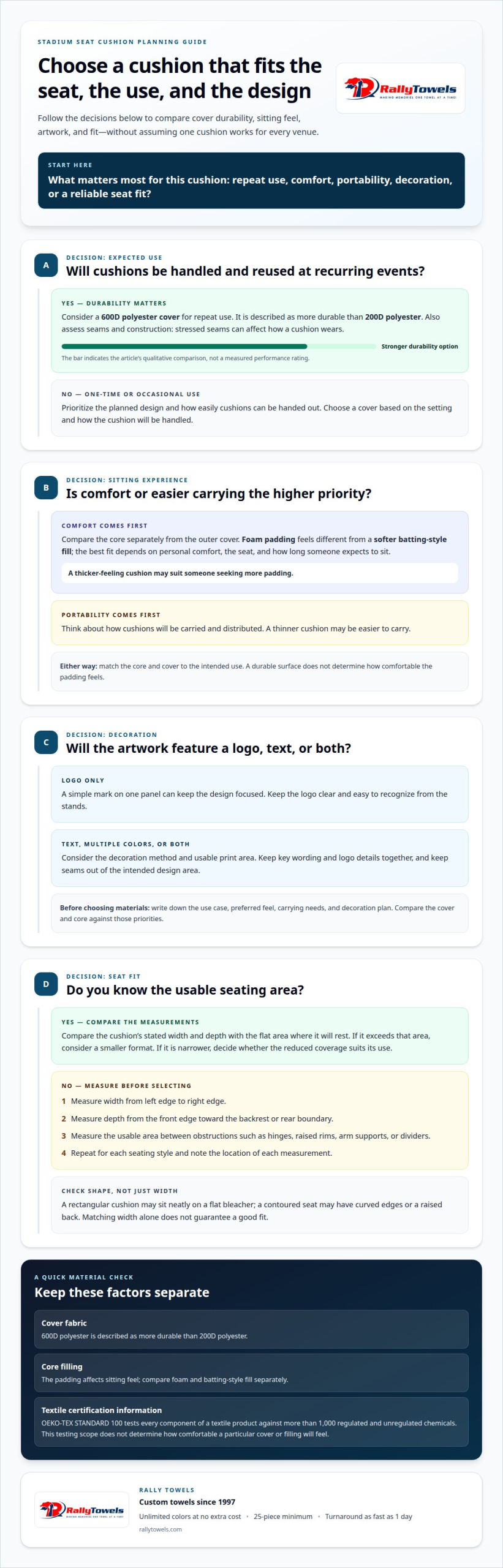
For a cushion used at repeated games, assess its outer fabric and inner padding separately. A tough cover can resist wear from bleachers, bags, and regular handling. The filling affects comfort during a long event. The best choice balances both, rather than relying on a single material label.
Compare polyester cover weights
For the outer layer, 600D polyester is described as more durable than 200D polyester. That makes 600D a useful material to consider for stadium seat cushions with logo decoration, especially when people will carry and reuse them. The denier figure identifies the fabric option being compared. It doesn’t, by itself, describe the cushion’s padding or comfort.
Look beyond the fabric label when comparing options. A cushion cover faces friction against rough seating, pressure from sitting, and handling between events. Seams and construction also affect performance. For example, even a durable panel can wear sooner at a stressed seam. Evaluate fabric weight alongside how the cushion is assembled.
Choose the cover with its setting in mind. A booster group distributing cushions for recurring home games may prioritize durable polyester. A one-time event may focus more on the printed design and how easily cushions can be handed out. In either case, decide how the cushions will be used before settling on a fabric.
Match the filling to the seating experience
The cushion’s core matters as much as its cover. Foam padding feels different from a softer batting-style fill. The right option depends on personal comfort, the seat, and how long someone expects to sit. A thin cushion may be easier to carry, while a thicker-feeling one may suit someone seeking more padding. Don’t assume the outer fabric determines comfort.
Use a simple comparison process. First, decide whether portability or cushioning matters more. Next, consider the expected use, such as a short game or a full day of events. Then compare the core descriptions and cover fabric together. This helps avoid choosing a durable surface that doesn’t suit the intended seating experience.
Consider how the materials work together. A firm core beneath a sturdy polyester cover may suit frequent handling. A softer fill may appeal more when sitting comfort is the priority. These examples reflect different needs, not a universal winner. Let the intended audience and use guide the choice.
- For repeat use: Compare 600D polyester with lighter cover options, including 200D polyester.
- For comfort: Consider the filling separately from the outer fabric.
- For portability: Think about how cushions will be carried and distributed.
- For decoration: Consider how the chosen material supports the planned logo or text.
Consider decoration and textile information
Decoration choices can influence the material decision. Promotional stadium cushions may use a one-color imprint in one location. A simple logo on one panel keeps the design focused. If the artwork includes several colors or additional text, the decoration method and usable print area become important considerations.
Prepare the artwork around its intended placement. Keep key wording and logo details together, and don’t treat seams as part of the design area. A booster organization, for example, might place its main mark on the front and keep the layout uncluttered. Clear artwork stays easy to recognize from the stands.
Textile certification can also inform a material review. According to the OEKO-TEX Association, OEKO-TEX STANDARD 100 tests every component of a textile product against more than 1,000 regulated and unregulated chemicals. This describes the certification’s testing scope. It doesn’t determine whether a cushion’s cover or filling will feel comfortable for a particular person.
Before making a final selection, write down the use case, preferred feel, carrying needs, and decoration plan. Then compare the cover and core against those priorities. A 600D polyester cover may be a stronger durability choice than 200D polyester, while the padding determines the sitting feel. Treat both as essential parts of the decision.
What size stadium seat cushions fit standard bleachers and stadium seats?
Start with the seat itself, not an assumed standard cushion size. Bleachers and stadium seats vary in usable width, depth, shape, and nearby obstructions. A cushion that fits one row may overlap a neighboring seat elsewhere. For a reliable fit, measure the seating surface where the cushion will rest, then compare those dimensions with the cushion’s stated size.
Measure the usable seating area
Use a tape measure to record the seat’s width from left edge to right edge. Measure the depth from the front edge toward the backrest or rear boundary. Keep the tape aligned with the surface, especially if the seat slopes. Record width and depth separately so you don’t confuse the measurements.
Next, identify the usable area rather than the full visible structure. A seat hinge, raised rim, arm support, or divider can reduce the flat space available. For example, a wide metal bleacher may have less practical room than its overall width suggests. Measure between obstructions where the cushion will actually sit.
For a venue with several seating styles, repeat the process for each type. A stadium might have open bleachers in one section and individual molded seats elsewhere. Record each measurement with its location, such as “upper bleachers” or “covered section.” This gives the organizer a useful comparison instead of relying on one seat as a stand-in.
Compare dimensions and shape
Once you have the seating measurements, compare them with the cushion’s listed width and depth. A cushion should rest within the usable area without covering an adjoining seat or catching against a divider. If its dimensions exceed the flat surface, consider a smaller format. If it is narrower, decide whether the reduced coverage suits its intended use.
Shape matters too. A rectangular cushion may sit neatly on a flat bleacher, while a contoured seat can have curved edges or a raised back. Matching width alone doesn’t guarantee a good fit. Compare the cushion’s outline with the seating surface, including corners and curves. A paper outline can help visualize the footprint before finalizing artwork.
Also consider how the cushion will be used. A single attendee may want coverage centered beneath them. A group distributing cushions may prefer one consistent size that fits the main seating area. For example, a school event with both bench-style and individual seats may need separate sizing decisions rather than one universal choice.
Plan for carrying and decoration
Dimensions affect more than seating coverage. A larger cushion takes up more space when attendees carry it, store it, or collect it after an event. For a giveaway, consider the handout process and where attendees will take the cushion. A compact option may be easier to manage, while broader coverage may matter more during extended seating.
Keep the logo or text within the cushion’s printable area. First, identify the usable face of the cushion. Then position the main artwork away from edges, seams, and curved sections. A centered logo, for instance, can look balanced on a rectangular face. Adding text around it requires enough clear space to keep the design readable.
Before approving a layout, compare the artwork’s proportions with the selected cushion dimensions. A tall design can look cramped on a shallow surface, while a wide mark may lose impact on a narrow one. Share the intended size and artwork together so the decoration can be planned around the actual footprint, not an assumed seat measurement.
Use this sequence for a practical fit decision: measure width and depth, note obstructions, compare the cushion outline, and then plan the artwork. For stadium giveaways, custom stadium fleece blankets can complement the seating design, with their dimensions considered separately for a coordinated event look.
Once the physical fit is settled, consider how the cushion will represent the group. Custom stadium seats can feature a group’s logo, text, or both. Confirm the usable footprint before settling on the design, so artwork choices don’t replace checking the fit.
For a fundraiser, organizers set the selling price for custom seats, using the costs provided to determine their markup. Review those costs before choosing a price. A clear fit decision and a considered selling price help organizers plan an option suited to the seating area and the group.
Rally Towels
Rally Towels helps teams and event organizers create coordinated stadium giveaways. Custom rally towels can complement a seating campaign, while custom stadium fleece blankets add another branded item for fans. Choose screen-printed or full-color dye-sublimated rally towels, then submit artwork featuring a logo, text, or both. Unlimited colors are available at no extra cost, with a 25-piece minimum and turnaround as fast as 1 day.
For a cohesive event package, pair the giveaway design with the colors and identity used across your stadium materials. Rally Towels can help prepare custom promotional products around your event artwork, including custom stadium fleece blankets and rally towels. Contact Rally Towels to discuss your project.
Carry Your Event Identity Beyond the Seat
Use the artwork for stadium seat cushions with logo decoration as a starting point for a wider event identity. Matching colors and visual elements across fan materials can make a giveaway feel thoughtfully connected, without forcing every item into the same layout.
For complementary promotional items, Rally Towels offers promotional and stadium giveaways, including custom rally towels printed with screen printing or full-color dye sublimation. Keep the main logo recognizable, then adapt its placement and supporting text to suit each item.
Share your event goals and artwork when planning a related giveaway. Rally Towels can help with its custom promotional products, while your cushion design remains the guide for a coordinated look. Get a free quote from Rally Towels and take the next step toward a distinctive event identity.
Frequently Asked Questions
Can custom stadium seat cushions be used as promotional or fundraising merchandise?
Yes. Organizations can distribute custom cushions as event giveaways or sell them to supporters as a fundraiser. Booster groups can also offer advertising space on cushion backs to local businesses and supporters. For an event giveaway, Rally Towels offers stadium giveaways and custom rally towels that can complement a coordinated fan promotion. Choose the fundraising approach and artwork to suit your audience, event, and the identity you want fans to take home.