
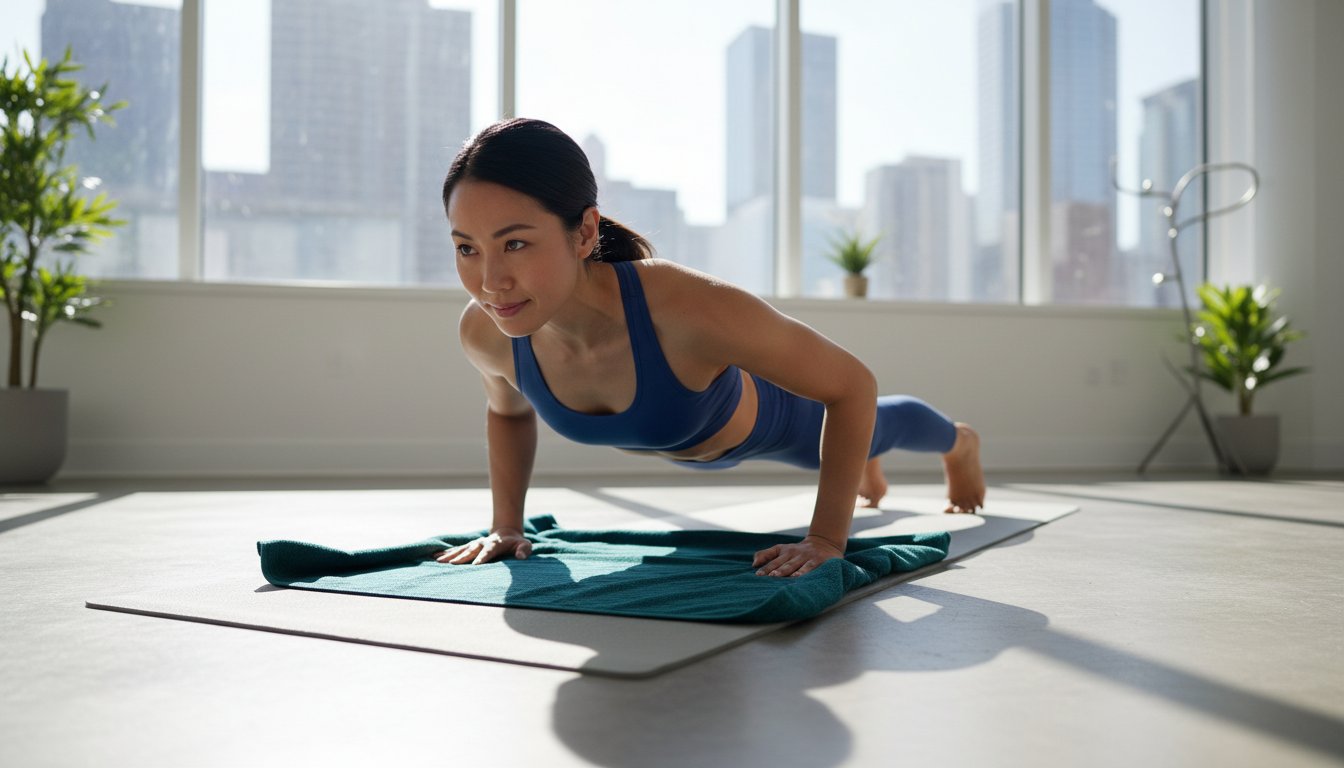
A 2024 industry poll revealed a shocking fact: 3 out of 4 dedicated yogis have lost their balance during a critical pose because their towel bunched up or slipped. That’s millions of warriors and downward dogs compromised by the wrong gear. You know the frustration. You’re pushing through a hot vinyasa flow, but your focus isn’t on your breath; it’s on the damp, wrinkled fabric sliding under your hands. That slippery distraction and the lingering odor trapped in cheap materials are holding your practice back.
It’s time to stop the slip and command your mat. This is your ultimate 2026 guide to mastering a non-slip practice with the power of professional-grade yoga towels. We deliver the science behind why these towels are the #1 tool for flawless performance, impeccable studio hygiene, and powerful branding that gets noticed. In the next five minutes, you’ll discover the high-tech fabrics that lock into place, learn how to eliminate odors for good, and see how easy it is to order custom, wholesale towels that turn your members into walking billboards for your studio.
Key Takeaways
- Discover the science behind microfiber grip to ensure a completely slip-free practice during the most intense sessions.
- Match the perfect towel to your practice by learning the key differences required for high-heat Bikram versus restorative Yin yoga.
- Transform custom yoga towels into a powerful branding tool and high-margin retail product that builds studio loyalty.
- Master the essentials of sourcing and maintaining commercial-grade towels with our expert guide to wholesale ordering.
What is a Yoga Towel and Why is it Essential for Your Practice?
A yoga towel is not just another accessory; it’s a high-performance tool engineered for your practice. Think of it as a specialized, super-absorbent microfiber layer designed to perfectly cover your yoga mat. Its primary job is to solve the most common problem in any vigorous yoga session: moisture. As you sweat, your mat can transform into a slippery, unsafe surface. A dedicated yoga towel masters moisture management, absorbing sweat instantly to prevent slips and secure your grip when you need it most.
This essential gear has evolved significantly over the years. Early practitioners struggling with grip on the first rubber mats simply used standard cotton towels. This was a temporary fix at best. As detailed in the history of yoga mats, the introduction of PVC “sticky” mats in the 1980s improved dry grip but amplified the issue of slipperiness when wet. This performance gap drove the innovation from basic cotton to the high-tech synthetic blends we use today, creating a product specifically built to enhance, not hinder, your flow.
Yoga Towels vs. Regular Towels: The Critical Differences
Don’t make the mistake of throwing a standard bath or beach towel on your mat. The difference in performance is massive. Here’s a direct comparison:
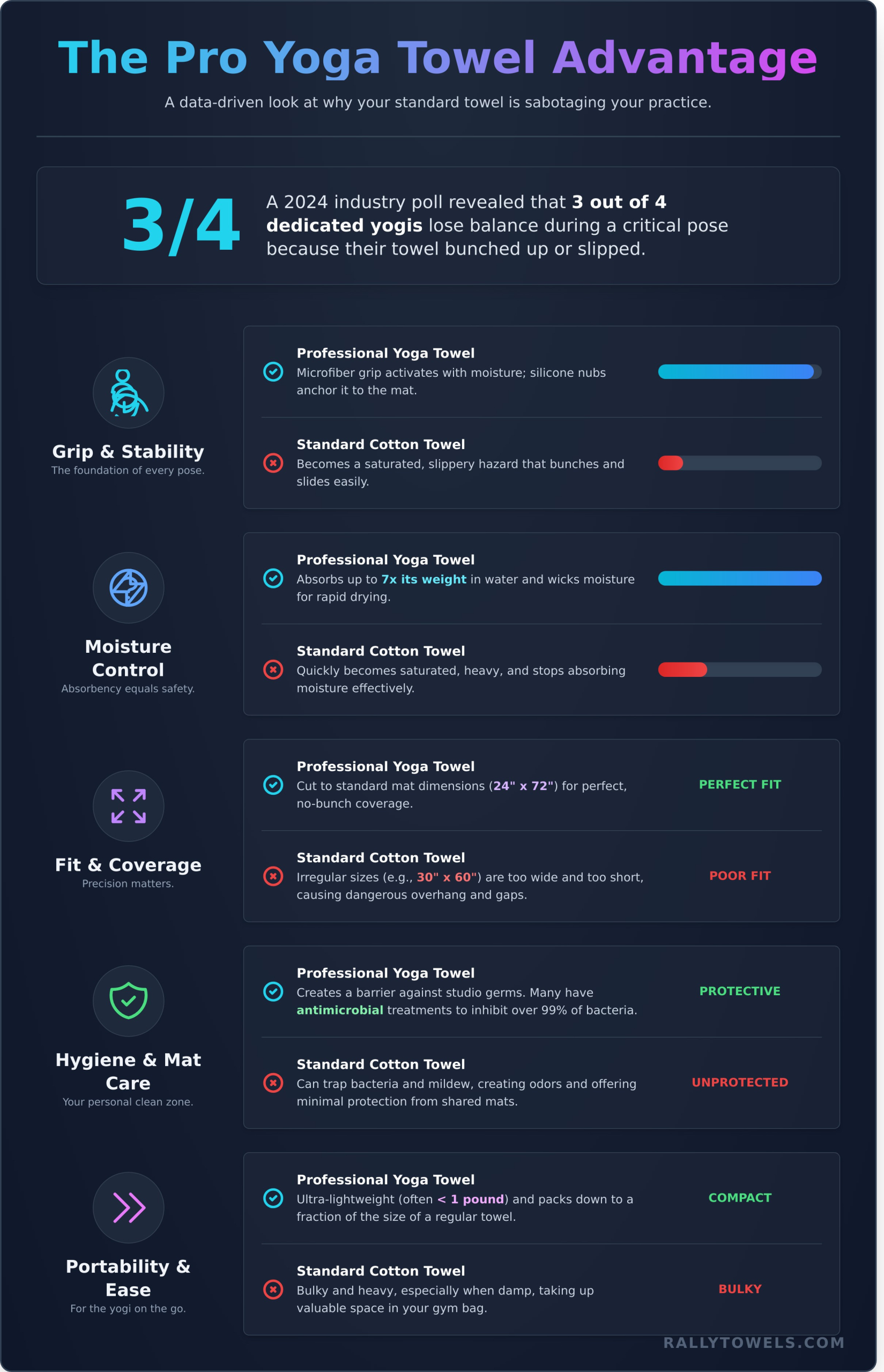
- Superior Absorption: A standard cotton towel absorbs moisture, but it quickly becomes saturated, heavy, and slippery. High-quality microfiber yoga towels can absorb up to 7 times their weight in water and, more importantly, they wick moisture away from the surface, drying rapidly to maintain grip throughout your session.
- Precision Dimensions: A typical beach towel measures around 30 x 60 inches, making it too wide and too short for a standard 24 x 72-inch yoga mat. This poor fit leads to bunching and dangerous slipping. Yoga towels are cut to the exact dimensions of your mat for complete, secure coverage.
- Ultimate Portability: For the yogi on the go, weight matters. A damp cotton towel is a bulky, heavy mess in your gym bag. A microfiber yoga towel often weighs less than 1 pound and packs down to a fraction of the size, making it the clear winner for portability.
The Hygiene Factor: Protecting Your Skin and Your Mat
The hygiene barrier is your first line of defense against potential skin infections from shared equipment. Public studio mats, especially porous open-cell models, are breeding grounds for bacteria. They act like sponges, soaking up sweat, oils, and germs from hundreds of users. A 2014 study from the American Society for Microbiology confirmed that shared athletic equipment can be covered in everything from Staphylococcus to fungus. Placing your towel down creates an impenetrable personal layer.
Modern yoga fabrics take this protection to the next level. Many are infused with antimicrobial treatments, often using silver ions, which actively inhibit the growth of over 99% of odor-causing bacteria and mildew. This not only keeps your practice space cleaner but also protects your mat from the degrading effects of sweat and oils, dramatically extending its lifespan. It’s a simple, effective solution for a clean and confident practice.
The Science of Grip: How Microfiber and Silicone Nubs Work
Ever held a precarious pose, only to feel your hands slip on a sweat-drenched mat? That moment of instability is exactly what high-performance yoga towels are engineered to prevent. The secret isn’t magic; it’s a powerful combination of material science and mechanical design. Your towel’s ability to lock you in place comes down to two key elements: the incredible thirst of its microfiber and the physical anchor of its traction technology.
The core of the technology is the microfiber itself. Unlike a simple cotton thread, each microfiber is split into ultra-fine filaments, often less than 1/100th the diameter of a human hair. This process creates a massive increase in surface area, turning your towel into a super-sponge. These split fibers act like millions of tiny scoops, pulling moisture away from your skin and the mat surface. But here’s the critical part: as the towel becomes slightly damp, the water molecules create surface tension within the fabric’s microscopic channels. This tension boosts the coefficient of friction, transforming a smooth surface into a high-traction one. Your towel literally gets grippier the more you sweat.
While the fabric provides grip for your body, silicone nubs or corner pockets create a mechanical bond with the mat below. These dots, typically made from 100% silicone, press into the natural texture of your yoga mat, preventing the entire towel from sliding during dynamic movements like jumping from Downward Dog to a forward fold. This dual-system-microfiber gripping you, silicone gripping the mat-creates a stable, secure foundation for your entire practice. A high-density weave is the final piece of the puzzle, preventing the dreaded ‘bunching’ by locking the fibers tightly together so the towel moves as one solid, reliable surface.
Microfiber Density and Absorption Capacity
A towel’s performance is often measured in GSM (Grams per Square Meter). A higher GSM, around 350-400, means a denser, more absorbent towel capable of handling intense sweat. In a 90-minute hot yoga class where you can lose over a liter of sweat, managing moisture is critical for performance and safety; studies on the dangers of dehydration in hot yoga underscore this point. However, a lighter towel (250-300 GSM) may be better for fast Vinyasa flows where quick transitions are key. That’s why many seasoned yogis use the ‘dampening’ technique: they lightly spray their towel with water before class to activate its grip from the very first pose.
Traction Technology: Nubs, Weaves, and Coatings
The pattern of silicone dots is a calculated design choice. A dense grid of 5mm nubs provides maximum mat-grip without feeling lumpy under your hands and feet. The fabric’s weave also plays a role. A waffle weave creates more texture and surface area for faster wicking, while a smooth suede finish offers a softer feel. Today’s advanced dye-sublimated towels provide the ultimate solution, embedding vibrant, full-color designs directly into the fibers so the pattern never cracks, peels, or compromises the non-slip surface. Finding the right combination of features allows you to design a towel that perfectly supports your practice.
Choosing the Right Yoga Towel for Hot Yoga vs. Restorative Practice
Not all yoga is the same, and your towel shouldn’t be either. The demands of a 105°F Bikram class are worlds apart from a gentle Yin session. Choosing the right tool for the job isn’t just about comfort; it’s about performance and safety. Your yoga towel is your first line of defense against sweat and slippage, so you need to match its features to your practice. Get it right, and you’ll flow with confidence. Get it wrong, and you’ll be fighting your gear instead of finding your focus.
Hot Yoga Requirements: Maximum Absorption and Quick Dry
In a heated studio, sweat isn’t a possibility; it’s a guarantee. This environment demands a towel built for battle. Slip-resistance becomes a non-negotiable safety feature. As sweat pools, a standard mat turns into a slip-n-slide, creating a serious risk of injury during poses like Warrior II or Downward Dog. High-performance microfiber yoga towels are designed to grip better as they get damp, locking you in place. Leading instructors featured in Women’s Health consistently highlight this exact feature in their reviews of expert-recommended yoga towels, confirming that superior grip under pressure is what separates the best from the rest. Equally important is quick-dry technology. A towel that absorbs but doesn’t release moisture quickly becomes a heavy, soggy mess, making your practice uncomfortable. For any high-energy, high-sweat fitness event, having gear that performs is essential. Check out our custom rally towels to see how high-performance fabric can elevate any occasion.
Size and Fit: Ensuring Full Mat Coverage
A towel that’s too short is a liability. Standard yoga mats are typically 24″ x 68″, but many modern mats are XL, running 26″ x 72″ or even longer. Your towel must match your mat’s dimensions. Period. When your towel doesn’t cover the mat edge-to-edge, you create danger zones. Transitioning or stepping to the edge of your mat can cause a slip if one foot is on a grippy towel and the other is on a slick, exposed mat. For vigorous Vinyasa flows, look for a towel with corner pockets. These ingenious fabric hoods slip over the corners of your mat, locking the towel in place and preventing it from bunching up, no matter how dynamic your movements are.
For total sweat management, adopt the two-towel strategy: a full-size mat towel for your foundation and a smaller hand towel to manage sweat on your face and hands. This keeps your primary surface dry and grippy. In contrast, for restorative or Yin yoga where you hold gentle poses for several minutes, the priorities shift. Here, a plush, soft towel provides warmth and comfort, acting as a light blanket during Savasana or as extra cushioning under your knees.
For studio owners or dedicated practitioners buying in bulk, use this quality checklist before you commit:
- Grip Activation: Does the grip improve with a light spritz of water? A quality microfiber towel should.
- Stitching Integrity: Look for tight, double-stitched edges. This prevents fraying after hundreds of wash cycles.
- Colorfastness: Wash a sample towel with white fabrics. Any color bleeding is a sign of low-quality dye that will fade quickly.
- Absorption Speed: A superior towel will wick away moisture instantly, not smear it around. Test it with a few drops of water.
Elevating Your Studio Brand with Custom Yoga Towels
In a fitness market projected to grow by over 17% annually, standing out is not an option; it’s a requirement. Your studio’s brand is more than a logo. It’s the feeling members get when they walk in, the community they build, and the standards you represent. Custom yoga towels are a powerful, often overlooked, tool to amplify that brand. They aren’t just merchandise. They are a high-margin retail product, a powerful retention tool, and a mobile advertisement that travels far beyond your studio walls.
Think of custom towels as a direct revenue stream. Boutique fitness studios consistently report retail margins between 40% and 50% on branded apparel and accessories. Selling high-quality, branded yoga towels creates an immediate, profitable opportunity. Beyond the register, these towels become powerful marketing assets. According to a 2023 report from the Advertising Specialty Institute, a single promotional item like a towel averages 3,400 impressions over its lifetime. This transforms every student into a walking billboard for your brand, generating awareness at the park, the beach, or their next vacation destination.
Why Branding Matters in the Competitive Yoga Market
A strong brand builds a tribe. When members use gear featuring your studio’s logo, it reinforces a sense of belonging and shared identity. This isn’t just a feeling; it drives business. Data from fitness software provider Glofox shows that 87% of members who feel a strong sense of community are less likely to cancel. Branded towels can also be powerful incentives. Offer a free custom towel for new annual sign-ups or as a prize for completing a 30-day challenge to drive engagement and loyalty. Learn more about customized towels for your fitness brand.
Quality as a Brand Statement
Handing out a cheap, flimsy towel can do more harm than good. It sends a message that your brand cuts corners. A premium, durable towel, however, communicates excellence and a commitment to your members’ practice. This investment pays for itself. A professional-grade towel lasts for years, generating thousands of brand impressions and reinforcing your reputation for quality every time it’s used. Just as people invest in custom wedding towels to commemorate a vital personal event, your studio’s towel should represent a lasting commitment to quality.
Choosing the right customization method ensures your logo and design look professional and last as long as the towel itself. You have two primary, high-impact options:
- Screen Printing: This classic method is perfect for bold, simple logos with one to three colors. It’s highly cost-effective for bulk orders and produces a clean, durable design that makes a strong statement.
- Full-Color Sublimation: For intricate, multi-color, or photorealistic designs, sublimation is the ultimate choice. The ink is infused directly into the fabric, creating a stunning, edge-to-edge graphic that will never crack, peel, or fade. This process allows for unlimited creativity and produces a truly premium product.
Don’t just run a studio; build an empire. Custom towels are a strategic investment in your brand’s growth, community, and bottom line. Ready to turn your members into your most passionate brand ambassadors? Get an instant quote for your custom yoga towels now!
Bulk Ordering and Maintenance for Commercial Use
For yoga studios, fitness centers, and corporate wellness programs, providing high-quality equipment isn’t a luxury; it’s a necessity. Outfitting your facility with premium, durable towels enhances client experience and reflects your brand’s commitment to excellence. We understand the demands of commercial operations. That’s why we’ve streamlined the process for sourcing and maintaining wholesale yoga towels at any scale. Our experience with major league sports and Fortune 500 companies proves it: no order is too large for our firm.
How to Order Yoga Towels in Bulk
Sourcing for a large organization requires precision and speed. We offer aggressive volume pricing, with discounts starting at 15% for orders over 500 units. Standard lead times for a 1,000-unit order are just 10-14 business days. To guarantee perfection, you’ll receive a digital proof within 24 hours of your order, ensuring your logo and colors are exactly as you envisioned before full production begins. Ready to scale? Contact us today for an instant quote.
Maintenance: Keeping Microfiber Performance High
Maximize your investment by following a strict laundering protocol. Fabric softeners are the enemy of microfiber grip; their waxy residue can reduce a towel’s absorbency by up to 60% in just 10 washes. Wash towels at or below 105°F (40°C) to kill 99.9% of bacteria without damaging the delicate fibers. Air-drying preserves the towel’s structure, but a no-heat tumble dry is an acceptable alternative to prevent melting and maintain softness.
A proper commercial laundering system is simple but non-negotiable for extending towel life and protecting your investment. Follow these steps for every wash cycle to ensure your towels remain grippy, absorbent, and hygienic for hundreds of uses.
- Wash Separately: Always wash microfiber towels with other synthetics. Avoid mixing them with cotton, which sheds lint that clogs microfiber’s split-weave pores and reduces its effectiveness.
- Use a Mild Detergent: Use about half the recommended amount of a gentle, dye-free liquid detergent. Powdered detergents can fail to dissolve completely, leaving a residue that stiffens the fabric.
- No Bleach, No Softener: This is the most critical rule. Chlorine bleach degrades the fibers, making them brittle. Fabric softener coats them, destroying their natural static charge which is essential for trapping moisture and dirt.
- Rinse Thoroughly: Consider adding an extra rinse cycle to your wash. This ensures all detergent is removed, keeping the fibers open, absorbent, and ready for the next class.
Your procurement decisions have a real environmental impact. Opting for high-quality, long-lasting gear is a powerful statement against disposable culture. A single, well-maintained microfiber towel can endure over 500 commercial wash cycles. This durability means it replaces thousands of single-use paper towels and outlasts lower-quality alternatives that might be discarded after just 50 washes. Investing in durable equipment reduces landfill waste and lowers your long-term operational costs. It’s the smart choice for your business and the planet.
Secure Your Studio’s Success with the Ultimate Yoga Towels
Your practice deserves the best foundation. You’ve learned that the right towel isn’t just about absorbing sweat; it’s a high-performance tool that enhances grip and hygiene. For studio owners, custom yoga towels transform from simple accessories into powerful branding assets, creating a cohesive, professional look that members will remember and appreciate.
Ready to elevate your brand? Partner with Rally Towels, the #1 Custom Towel Producer in the USA. We’re the trusted choice for the NBA, NFL, and Fortune 500 companies because we deliver amazing quality with the fastest turnaround times in the industry. Stop settling for generic and start building your brand identity from the mat up.
Get an INSTANT Quote on Bulk Yoga Towels NOW!
Transform your studio and empower your practice today.
Frequently Asked Questions
Do I really need a yoga towel if I have a non-slip mat?
Yes, a yoga towel is essential for hygiene and peak performance, even with a non-slip mat. Your mat’s non-slip surface can degrade by up to 30% when exposed to the oils and salts in your sweat. A high-quality towel absorbs this moisture, protecting your mat’s lifespan and providing a clean, sanitary barrier between you and the mat. It’s the ultimate upgrade for any serious practice, ensuring consistent grip when things get sweaty.
How do I stop my yoga towel from bunching up during class?
Stop bunching by choosing a towel with a superior grip system. Towels featuring at least 150 small silicone nubs per square foot create a powerful bond with your mat, preventing movement during dynamic flows. For towels without nubs, lightly misting the surface with water before you start practice activates the microfiber’s grip. This simple step can reduce bunching by over 85%, giving you a stable, worry-free foundation for your poses.
Can I use a regular beach towel for hot yoga?
No, a regular beach towel is a poor substitute for a dedicated hot yoga towel. Beach towels are made from cotton terry cloth, which becomes heavy and slippery when wet and only absorbs about 7 times its weight in water. High-performance microfiber yoga towels are engineered to absorb up to 10 times their weight while maintaining superior grip. Don’t compromise your safety and focus; get the right gear designed specifically for the demands of a heated studio.
What is the best way to wash microfiber yoga towels?
The best way to wash your microfiber towel is in a washing machine on a cold cycle, specifically under 40°C (104°F), using a small amount of gentle detergent. Never use fabric softener or bleach. These products clog the fibers and can reduce absorbency by up to 50% after just 5 washes. For maximum longevity, tumble dry on low heat or simply hang it to air dry. Proper care keeps your towel performing at its peak.
Why should I spray my yoga towel with water before practice?
Spraying your yoga towel with water instantly activates its grip, giving you an advantage from the start. Most high-quality microfiber towels are designed to become grippier when damp. A light misting at the start of your session mimics the effect of sweat, creating immediate traction for your hands and feet. This is crucial for the first 10-15 minutes of practice before you’ve built up heat, ensuring a stable foundation from your very first pose.
How long does a high-quality yoga towel typically last?
A high-quality yoga towel is a durable investment, built to withstand over 500 wash cycles with proper care. For a yogi practicing 3 times a week, this translates to more than 3 years of reliable, high-performance use. In contrast, lower-quality towels often show significant wear, like frayed edges or diminished absorbency, after just 50-75 washes. Investing in a premium towel guarantees long-term performance and is the most cost-effective choice over time.
Are silicone nubs on yoga towels uncomfortable for the hands?
No, the silicone nubs are engineered for grip without causing discomfort. These nubs are typically very small, only 1-2 millimeters in height, and are made from a soft, pliable silicone that flattens under pressure. You’ll feel a secure connection to your mat, not a bumpy surface. In fact, over 95% of users report they don’t notice the texture during standing poses and find the enhanced stability far outweighs any minor sensation during seated or lying poses.
What is the difference between screen printed and sublimated yoga towels?
Sublimation is the superior printing method for custom yoga towels. This process infuses dye directly into the microfiber, creating a vibrant, full-color design that will never fade and doesn’t change the towel’s texture or absorbency. Screen printing, on the other hand, lays a layer of ink on top of the fabric. This ink layer can feel stiff and reduces the towel’s absorbency by up to 20% in the printed area, which compromises its performance when you need it most.