
The best first-day welcome kit isn’t necessarily the one packed with the most swag. It’s the one a new hire can actually use. Choosing new employee welcome kit items can feel like sorting through endless generic ideas, especially when your team includes different roles, preferences, and work locations. A thoughtful note and a few practical, well-made essentials can make a stronger impression than a box of forgettable giveaways.
This guide compares useful, brandable options and shows how to build a first-day package that fits your workplace and onboarding goals. You’ll find ideas for everyday essentials, remote and hybrid employees, and optional branded touches, along with tips for evaluating quality, tailoring kits, and planning quantities. A custom towel, for example, can add a distinctive branded element when it has a practical place in your team’s routine. Keep the focus on usefulness and a personal welcome, and your kit can reflect your company without feeling like an advertisement.
Key Takeaways
- Choose new employee welcome kit items for usefulness, role fit, and work location, rather than filling the package with generic swag.
- Compare options by everyday value, personalization, and how easily they can be packed and distributed.
- Use a simple five-step plan to shape the kit, personalize it, and check details before delivery.
- Consider custom towels or T-shirts as optional branded additions when they suit your team culture and employees’ practical needs.
- Keep the package focused: choose relevant items that help new hires feel included and ready to start.
What Should New Employee Welcome Kit Items Actually Do?
A new employee welcome kit brings together practical supplies, helpful onboarding information, and optional gifts to help a new hire feel prepared and included. The strongest kits aren’t the fullest. They focus on what employees can use and include a personal message that makes the welcome feel genuine.
Think of the kit as one small part of organizational socialization, the broader process of helping employees understand their role and workplace. Practical essentials can support the first days. Branded gifts are an optional extra, not a substitute for clear guidance, introductions, or a thoughtful note.
For a quick visual overview of welcome gifts and onboarding ideas, watch:

How welcome kits support the first days at work
A useful kit can prevent small first-day hassles. A notebook and pen give someone a place to capture instructions, while a concise welcome guide can point them to key contacts, schedules, or workplace resources. Match supplies to the employee’s day-to-day tasks, and make essential onboarding details easy to find rather than hiding them among gifts.
Add a personal note with the employee’s name and a warm message from their manager or team. That simple gesture can make a standard package feel considered. Merchandise can express team spirit, but it can’t replace the conversations, training, and support that shape someone’s experience at work.
What to consider before choosing welcome kit items
Start with the recipients and the kit’s purpose. Office-based employees may receive their kits in person, while remote employees need items that can be packed and delivered. For distributed teams, decide whether the same package makes sense across locations or whether a few adjustments would make it more relevant.
Check role-specific needs, accessibility, dietary preferences if you’re including food, and relevant workplace policies. Then choose new employee welcome kit items that fit those needs before adding company branding. A custom towel, for example, may suit a team with an active culture or a practical use for one, but it won’t belong in every employee’s package. Prioritize fit and quality over filling every space.
12 New Employee Welcome Kit Items to Consider
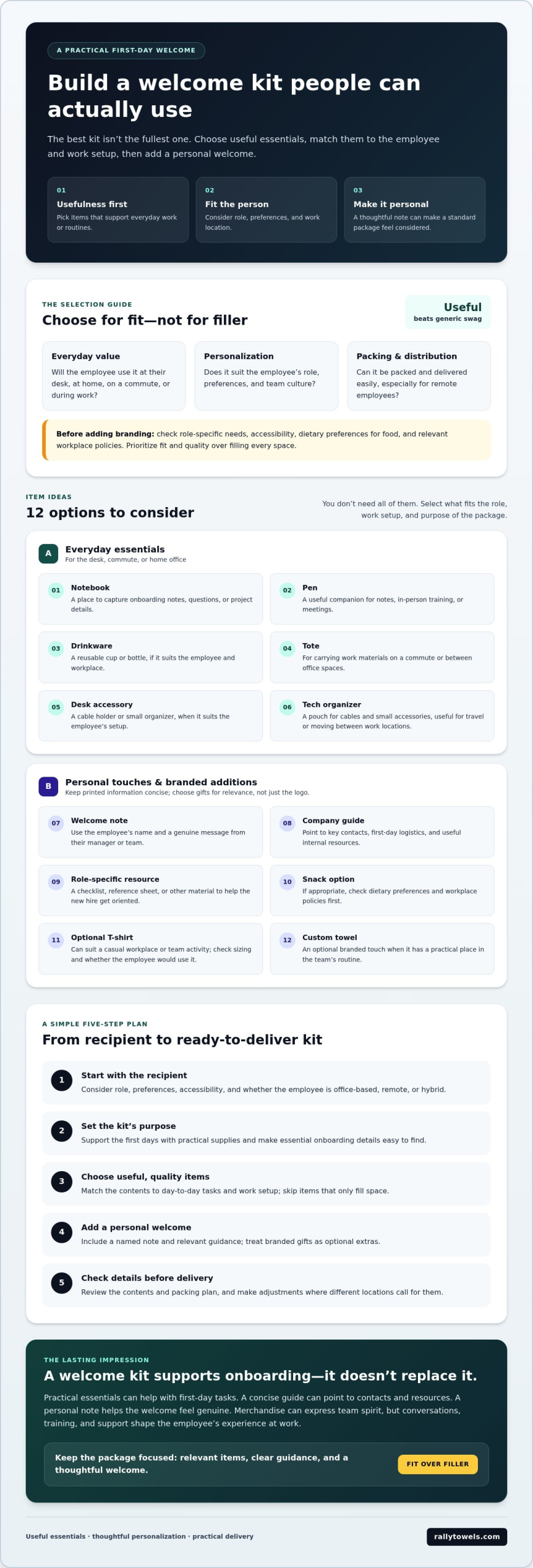
You don’t need to include all 12. Choose the new employee welcome kit items that fit the role, work setup, and purpose of your package. A welcome note and useful essentials can make a more considered positive first impression than a box filled with things employees won’t use.
Useful essentials for the desk, commute, or home office
Start with practical items that support the employee’s routine. Office-based hires may appreciate supplies for their desk, while remote employees may need items that are easy to pack and useful at home. Prioritize everyday use and quality over disposable extras.
- Notebook: A simple place to capture onboarding notes, questions, or project details.
- Pen: A useful companion to a notebook, especially for in-person training or meetings.
- Drinkware: Consider a reusable cup or bottle if it suits the employee’s preferences and workplace.
- Tote or lunch bag: Helpful for carrying work materials or meals during a commute. To keep daily lunches and drinks fresh throughout the workday, discover Coolpod for freezable cooler bag options.
- Desk accessory: Choose a practical item, such as a cable holder or small organizer, only if it suits the employee’s setup.
- Tech organizer: A pouch for cables and small accessories may help employees who travel or move between work locations.
Personal touches and branded items employees may use
Use information and small gestures to make the welcome more personal and reduce guesswork. Keep printed materials concise, and choose branded gifts for their relevance, not just to display a logo.
- Welcome note: Add the employee’s name and a genuine message from their manager or team.
- Company guide: Share key contacts, first-day logistics, and pointers to useful internal resources.
- Role-specific resource: Include a checklist, reference sheet, or other material that helps the new hire get oriented.
- Snack option: If appropriate, offer a treat after checking dietary preferences and workplace policies.
- Optional T-shirt: Team apparel can suit a casual workplace or team activity. Check sizing and whether the employee would welcome it. Explore custom wholesale T-shirts as a branded apparel option.
- Optional custom towel: This can be a distinctive branded addition for a team, role, or workplace where a towel has practical use. Rally Towels makes custom towels for promotional use, which can complement onboarding essentials.
If a branded towel fits your team’s needs, explore custom promotional towels as an optional addition to your welcome package.
How to Compare Welcome Kit Items for Usefulness and Fit
Apply the same five checks to each option: Will the employee use it? Does it fit their role and work setting? Can it feel personal? Is it practical to pack? Can it be distributed reliably? This quick comparison helps you judge new employee welcome kit items by their value, not by how impressive they look in a product list.
| Option | Usefulness and role fit | Personalization | Packing and distribution |
|---|---|---|---|
| Consumable | A snack may be welcome, but dietary preferences and workplace policies matter. | A thoughtful selection can show care, though individual preferences vary. | Check packaging, handling, and whether it suits the delivery plan. |
| Reusable | A daily-use item may suit one team but duplicate something an employee already prefers. | A name or subtle design can add a personal touch if appropriate. | Consider size, weight, and whether it travels easily. |
| Digital | A role guide or resource can help remote and distributed hires find relevant information. | Tailor links and content to the employee’s role. | Easy to share, but make sure the employee can access it. |
| Branded | Choose an item with a natural connection to employees’ routines or team activities. | Use considered branding rather than making every item an advertisement. | Check sizing or other details that could complicate packing and delivery. |
Match items to role, location, and employee preferences
Picture the workday before choosing. Office-based employees may use shared workplace resources, while remote hires may need digital guidance they can open from home. Hybrid staff, field teams, and event-based employees may have different routines, so one item may not suit everyone. Ask about preferences when practical, while respecting privacy and accessibility needs. Avoid assumptions based on age, gender, job title, or location.
For example, a reusable item might be useful for someone who travels between job sites but unnecessary for a remote employee who already has a preferred version. Assess the actual need, not the job label.
Choose branding that feels useful, not promotional
Ask whether the item would still be useful without the logo. If so, branding may add a sense of team identity. If not, reconsider it. A few well-chosen branded pieces can feel more thoughtful than a logo-heavy assortment. A custom towel, for instance, may make sense for an active team or a role with a practical use for one, but it isn’t a universal welcome gift. Apply the same test to apparel and other branded merchandise: relevance comes first, followed by design.
Let relevance guide your decision: choose items that suit employees’ needs, routines, and distribution setup.
How to Build and Distribute a Welcome Kit Step by Step
A clear process turns good ideas into a package that’s ready to welcome someone. Use these five steps to plan new employee welcome kit items, prepare them accurately, and choose a handoff that fits each employee’s location.
- Define the audience. Estimate who will receive a kit and note relevant differences, such as office-based, remote, hybrid, field, or event-based roles. This helps you plan a consistent core package with adjustments where they’re useful.
- Set the purpose. Decide what the package should support, such as helping a hire get oriented, providing practical workday essentials, or introducing team culture. A clear purpose keeps the contents focused.
- Choose the items. Select the core set and any role-specific additions. Before committing, confirm order quantities, lead times, shipping arrangements, and customization details with suppliers. Don’t assume terms are the same across suppliers or orders.
- Personalize and proofread. Prepare approved artwork, then check names, messages, and company details before placing an order. Confirm that each item suits its intended recipient and collect any necessary details, such as apparel sizing, appropriately.
- Distribute and confirm. Choose an in-person handoff or shipping plan, then check addresses and delivery timing before fulfillment. Assign someone to handle questions if a package is delayed or an item is missing.
Plan kit contents, quantities, and personalization
Start with a recipient estimate based on your onboarding schedule. Then decide which contents will stay consistent and which may vary by role or work location. Keep a final checklist of items and recipients. For branded pieces, review artwork and spelling before ordering. A small error repeated across a batch can affect every package. Confirm supplier details before setting internal deadlines, especially if personalization or individual delivery is involved.
Make delivery part of the onboarding experience
For an in-person handoff, coordinate the kit with the first-day welcome so the employee knows who to ask about its contents. For remote hires, verify the shipping address and plan for arrival on the first day or another meaningful onboarding milestone. Include a brief note explaining the items and where to find support. Give distributed employees a contact for delivery or kit questions, and have a backup plan if a shipment doesn’t arrive as expected.
If a custom towel fits your team or workplace, explore custom towel options as one branded addition to your welcome kit.
Add Custom Towels or Apparel When They Fit Your Welcome Kit
Branded merchandise should complement a welcome kit, not define it. First choose the practical essentials and personal touches your new hires need. Then consider whether a towel or apparel would suit the team’s culture, roles, or activities. A relevant item can feel like a useful welcome. A gift with no clear purpose can become clutter.
When custom towels or T-shirts make sense
A custom towel may suit a team with an active work culture, a fitness-related setting, a company event, or a role where a towel has a practical use. It can also add a distinctive branded touch for employees who regularly take part in team activities. Explore custom rally towels when that style fits the intended audience and use.
T-shirts are best treated as optional team apparel, not a universal kit item. Consider whether employees would willingly wear one and whether it suits the workplace. If you include apparel, confirm sizing and give employees a way to share preferences when practical. The goal is to help people feel part of the team, not to give them another item they won’t use.
Rally Towels produces wholesale custom towels for promotional use. Its products may be one branded addition to an employer’s package, alongside onboarding essentials selected separately. Plan the other contents and assembly independently.
Turn a merchandise idea into a wholesale inquiry
Before contacting a supplier, clarify who the item is for, how employees might use it, the quantity you’re considering, and what artwork or branding you have prepared. Share your intended timing, too. Ask the supplier to confirm the product options, customization details, order quantities, and timing that apply to your project. These details can vary, so verify them before setting distribution plans.
Thoughtful planning keeps merchandise connected to its purpose. Choose an item for its fit first, then make sure the branding is clear and appropriate. A custom towel may be a memorable option for the right team, while another workplace may be better served by practical supplies and a personal note.
If a branded towel fits your welcome-kit plan, explore custom towel and apparel options and share your intended use and project details when seeking product guidance.
Make Your First-Day Welcome Feel Personal
The best new employee welcome kit items are chosen with the person and their workday in mind. Start with practical essentials, add a personal welcome message, and tailor the package to employees’ roles and work locations. Branded merchandise should earn its place through usefulness, not just carry a logo.
If a custom towel or T-shirt fits your team, treat it as an optional addition to the essentials. Rally Towels offers wholesale custom towels and custom T-shirts, serving organizations ranging from athletic booster clubs to major sports leagues and Fortune 500 companies. Its branded products can be part of a package you build around your own onboarding needs.
Explore custom towel and apparel options for a potential addition to your welcome package. Choose with care, plan the handoff, and give every new hire a warm start that feels meant for them.
Frequently Asked Questions
What should be included in a new employee welcome kit?
There’s no universal checklist. Start with a personal welcome note, relevant onboarding information, and a small selection of practical items that fit the employee’s role and work setting. Consider accessibility, individual preferences, remote delivery needs, and company policies before finalizing the contents. Optional branded merchandise can add a team touch, but include it only if it’s useful or meaningful to the people receiving it.
How many items should go in an employee welcome kit?
The right number depends on the kit’s purpose, its recipients, and how it will be distributed. There’s no fixed number that suits every workplace. A focused selection of useful items can feel more thoughtful than a large assortment of extras. Choose the essentials first, add a personal touch, and include optional items only when they suit your team and can be delivered appropriately.
Are welcome kits useful for remote employees?
Yes, a well-planned kit can help remote employees feel welcomed, especially when it arrives at an appropriate onboarding milestone. Include a personal note and useful company information, and choose items that fit the person’s work setup rather than assuming they need home-office equipment. Confirm delivery details carefully. If collecting a shipping address or preferences, request only what’s needed and handle personal information thoughtfully.
What are good low-waste welcome kit items?
Choose durable, reusable items employees are likely to use rather than filling a package with disposable extras. A reusable item isn’t automatically a good fit, so consider the recipient’s needs and preferences before adding it. You can also reduce physical clutter by sharing useful onboarding resources digitally. Pair those resources with a personal note, and verify environmental claims about a product’s materials or sourcing before repeating them.
Should employee welcome kit items have a company logo?
Branding is optional. A restrained logo or design can connect an item to the team, but usefulness and employee comfort should come first. Consider whether someone might use or wear the item outside work, too. A mix of branded and unbranded essentials can keep the package practical rather than promotional. Before placing a wholesale order, make sure the intended artwork and company details have been reviewed and approved.
Can custom towels be included in a new employee welcome kit?
Yes, a custom towel can be a distinctive addition if it suits the employee’s role, team culture, event, or likely use. It won’t be right for every hire, and it shouldn’t replace onboarding information or practical essentials. Rally Towels produces wholesale custom towels. Employers considering one should confirm current customization and ordering details directly with the company before planning its inclusion.
When should a new employee receive a welcome kit?
Plan delivery for the first day or another meaningful onboarding milestone, based on the workplace and distribution needs. For remote hires, confirm the shipping address and allow time to coordinate delivery without assuming a specific transit time. Check that printed information is current and that the package complements the onboarding process. A kit can welcome someone, but it doesn’t replace structured guidance and support.