A cooling towel isn’t a complicated race-day tool: soak a PVA towel, wring out the excess water, then snap it in the air 2–3 times to activate it. It may feel cooler within 15–30 seconds, ready to drape around your neck or shoulders. For cooling towels for marathons and 5K races, the practical difference comes down to how you’ll use the towel and which features matter on race day.
It makes sense to want relief from heat without adding a fussy item to your gear. This guide explains how cooling towels work, why runners use them in hot weather, and how to choose between product options. You’ll also learn what factors can affect pricing, so you can compare choices with a clearer idea of what fits your event, your runners, and your budget.
Key Takeaways
- Learn the soak, wring, and snap routine for activating a cooling towel, plus how to refresh it during a race.
- See why hot, humid conditions can make cooling strategies useful, and how a towel fits into a runner’s race-day kit.
- Compare towel options by material, size, intended use, and order needs to find a practical fit for runners or event giveaways.
- Understand which factors shape custom towel pricing without relying on one-size-fits-all price assumptions.
- Explore how custom cooling towels and dye-sublimated designs can help make a race giveaway useful and recognizable.
1. What is a runners cooling towel and how does it work?
A runners cooling towel is a water-activated cloth worn against the skin during activity. Many use a porous fabric, such as PVA, that holds water while remaining comfortable to handle. As moisture evaporates, the damp surface can feel cooler than the surrounding air. The effect depends on airflow, humidity, and temperature, so a towel may feel different on a humid course than in dry conditions.
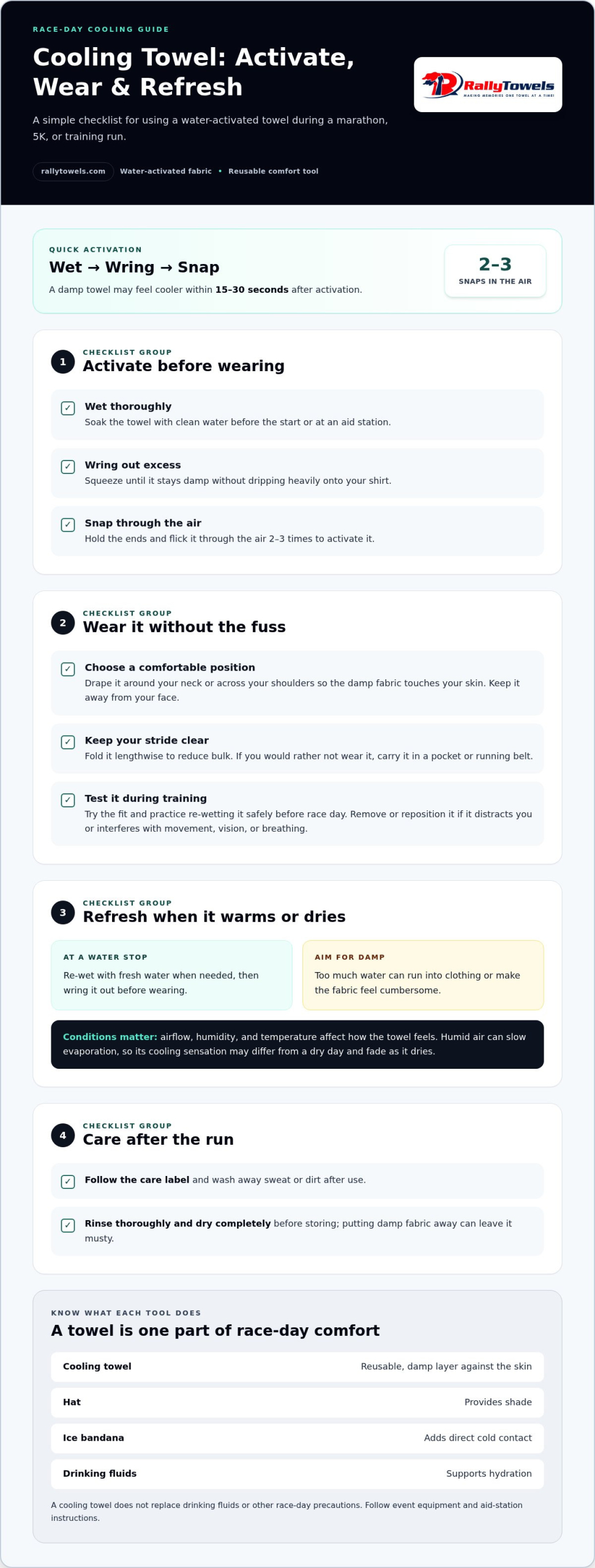
Activate it with this simple wet-wring-snap routine: soak the towel, wring out excess water, then snap it through the air 2–3 times. It may feel cooler within 15–30 seconds after activation. Drape it around your neck or over your shoulders, where the damp fabric can touch your skin without covering your face.
- Wet: Soak the towel thoroughly with clean water before the start or at an aid station.
- Wring: Squeeze out excess water so it stays damp without dripping heavily onto your shirt.
- Snap: Hold the ends and flick the towel through the air 2–3 times to activate it.
During a marathon or 5K, refresh the towel when it starts feeling warm or dry. Re-wet the towel with fresh water when needed, then wring it before wearing. Keep it damp rather than soaked, since excess water can run into clothing or make the fabric feel cumbersome.
Cooling towels, hats, ice bandanas, and hydration serve different purposes. A hat provides shade, an ice bandana adds direct cold contact, and drinking fluids supports hydration. A towel offers a reusable, damp layer against the skin. Treat it as one comfort tool, not a substitute for drinking fluids or other race-day precautions.
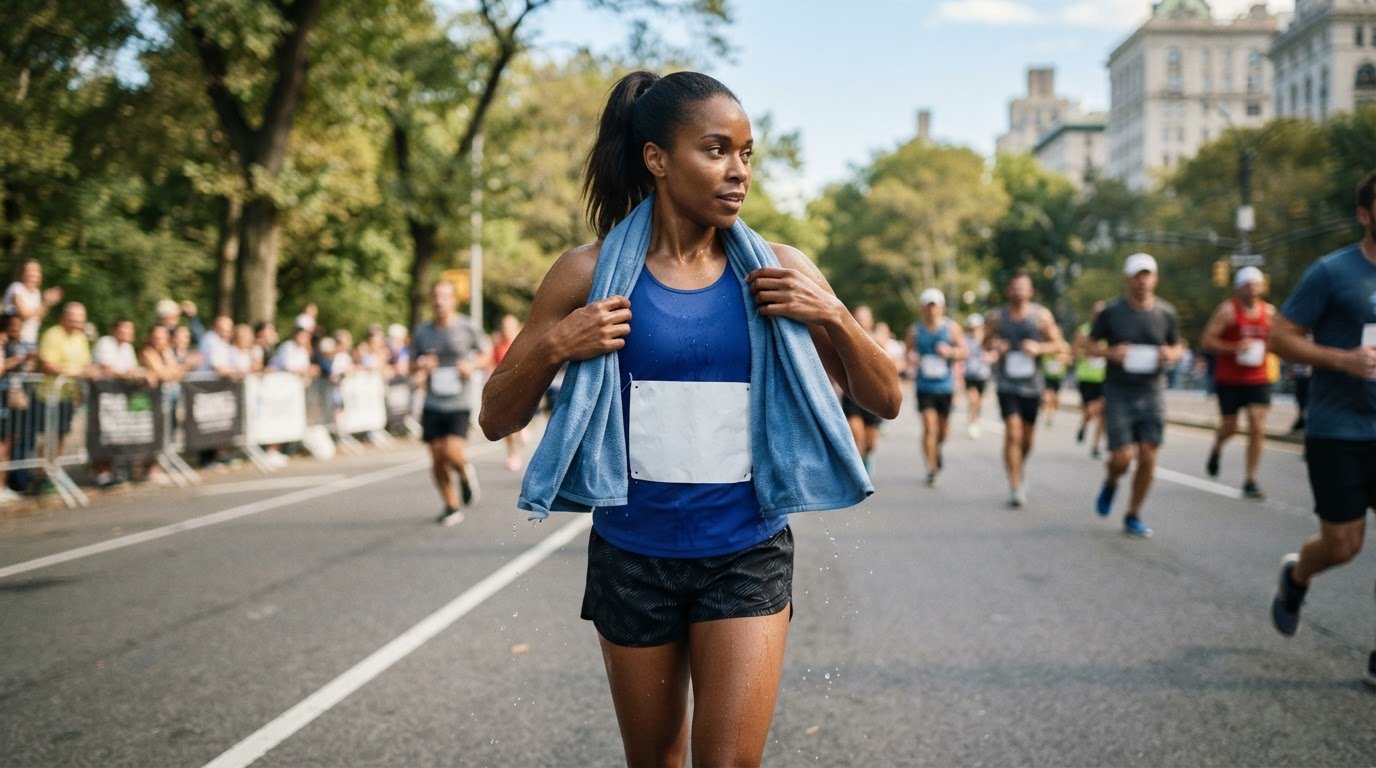
To keep a towel from interfering with your stride, fold it lengthwise and place it around your neck or across your shoulders. If you prefer not to wear it, carry it in a pocket or running belt, then re-wet it at a water stop. Test the position during a training run before race day.
For reusable-towel care, follow the product’s care label and wash away sweat or dirt after use. Rinse thoroughly, then let the towel dry completely before storing it. Putting damp fabric away can leave it musty. A clean, dry towel is ready for your next workout, race, or outdoor activity.
2. Why runners use cooling towels in hot weather
Heat can make a familiar route feel like a different race. At the 2011 Ironman World Championships, Energy Lab blacktop reached 131 degrees Fahrenheit. A marathon on a 90-degree day, or a northeastern run in the mid-90s with high humidity, can also put heat management on a runner’s mind. A cooling towel adds a damp layer against the skin, offering a practical way to seek localized comfort.
There is a physical reason runners pay attention to heat: as the body works, it produces heat, and the body must release it. A cooling towel can support that sensation through evaporation from its wet fabric. The fabric can reduce skin temperature by 20–30°F below ambient temperature. That figure describes the skin-temperature effect, not a guaranteed change in core temperature or race performance.
Hot conditions can affect exertion. Athletes exercising above 75°F experience up to 15% greater cardiovascular strain, according to the American College of Sports Medicine. Running economy may decline as core temperature rises above 102°F, with a drop of up to 3% for each 1°F increase above that threshold. These figures help explain why runners may seek cooling strategies, but a towel is only one part of managing heat.
Humidity affects how a cooling towel feels. Evaporation creates its cooling sensation, and humid air can slow that process compared with drier conditions. A towel may still feel refreshing, but it can warm or dry during a hot-weather race. Re-wetting it at an aid station restores moisture. Drinking fluids and using the event’s other heat-management resources remain separate steps.
Cooling towels are wearable personal items, but marathon and 5K race rules can vary by event. Follow the race’s equipment and aid-station instructions, especially if they describe what runners may carry or how supplies are distributed.
There are limits. A towel does not replace hydration, shade, pacing adjustments, or other heat-safety measures. It can become uncomfortable if it drips, shifts, or distracts you from your footing, and its cooling sensation can fade as it dries. Remove or reposition it if it interferes with movement, vision, or breathing. Stop running and seek race support if you feel unwell.
For a hot-weather race, test the towel during training rather than debuting it at the start line. Try wearing it at your neck or shoulders, then practice re-wetting it while moving safely. Race organizers planning participant giveaways can explore custom towel options suited to event use.
3. Cooling towel product options and prices
Cooling towels vary in fabric, size, construction, and intended use. PVA is one option for runners seeking water-activated fabric. Other designs may prioritize softness, coverage, compact packing, or event branding. Compare features you’ll actually use rather than choosing by appearance alone.
For a hot-weather race, start by considering how you’ll wear the towel. A narrower towel can sit around the neck with less bulk, while a wider design can cover more shoulder area. Consider where you’ll store it between uses, too. A towel that fits your running belt or race bag may be easier to manage than one you have to hold.
Fabric affects both feel and use. PVA cooling towels are activated with water, while a towel’s construction also affects how it drapes and feels when damp. Check how it feels against your skin during a training run. A scratchy edge or awkward fit can distract you more than a difference in color.
Event organizers have a different set of choices. A race giveaway may be selected for everyday runner use, event visibility, or both. Printed designs can feature event names, dates, and sponsor artwork. Dye sublimation is one printing approach to consider when the artwork is central to the design.
There isn’t one useful price for every cooling towel order. For custom orders, pricing depends on factors such as fabric, size, print coverage, and order quantity, so request a quote for your specifications. Compare quotes using the same towel dimensions and artwork requirements. That makes it easier to see whether a price difference reflects the product, customization, or quantity.
Runners choosing a single towel should weigh comfort, coverage, portability, and how easily they can re-wet it. Race organizers should also consider how the design will look when distributed and whether the towel fits the event’s purpose. For example, a compact giveaway may suit a 5K packet, while a larger format may offer more coverage for a marathon participant.
- For personal race use: prioritize comfortable contact, manageable size, and easy carrying.
- For event distribution: compare artwork space, towel format, and order quantity.
- For price comparison: request quotes using matching fabric, size, and print details.
Before choosing, test the fabric while damp and check that the towel stays comfortable around your neck or shoulders. This simple step helps match the product to your running routine instead of relying on a product description alone.
4. Cooling towels for sports and fitness
Cooling towels can fit into workouts beyond road races, including track sessions, outdoor training, and post-exercise recovery. Their role is practical: they provide a damp, cool-feeling layer against the skin while an athlete moves or rests. Placement matters. A towel around the neck or across the shoulders stays accessible during a run, while one draped over the neck after training can make cooldown more comfortable.
During exercise, runners often choose the neck because the towel can rest near pulse points without occupying their hands. Wearing a cooling towel at pulse points is associated with an 18% reduction in perceived exertion and a heart-rate decrease of 8–12 bpm. These figures describe reported effects, not a target every runner should expect. Fit, activity, and conditions shape the experience.
Duration is another planning factor. Most PVA cooling wraps provide 1–3 hours of active cooling. In humidity above 70%, most provide 1–1.5 hours. That shorter window can matter during a long training session or a race in humid weather. Runners can plan to re-wet the towel when its cooling sensation fades, instead of treating its initial activation as lasting throughout every workout.
For a hard track session, a cooling towel can also be part of the recovery routine. Drape an activated towel over the neck for 15 minutes after the session. After a race, drape it over the neck and shoulders for 20–30 minutes. Those timings offer clear examples for post-exercise use, whether the workout was intervals on a track or a demanding road effort.
Cooling towels suit different sports and fitness settings because they’re portable and can be used during activity or recovery. A runner may wear one on a warm training loop, then refresh it at a water stop. A gym user may reach for one after a challenging workout. For cycling, walking, or outdoor conditioning, consider whether the towel stays in place and feels comfortable during movement.
One marathon example involved a runner completing a 3:15 marathon on a 90-degree day at the end of an Ironman. It illustrates how an athlete may incorporate a cooling towel into a demanding race-day routine, not a guaranteed performance outcome. In practice, test the towel during training, assess how its weight and placement feel, and decide whether it helps you focus on the session.
5. Which cooling towel materials and sizes are best for running?
Start with the material’s intended use. PVA cooling fabric is designed to be activated with water, making it a practical option for runners who want a damp towel during activity. Its active cooling period is generally 1–3 hours; in humidity above 70%, most PVA wraps provide 1–1.5 hours. Those ranges can help you plan for a short 5K or longer marathon, but conditions affect how the towel feels.
Choose a towel material to match how you’ll use it. For a race, consider whether it feels comfortable against your neck, stays manageable when damp, and can be refreshed at water stops. A runner who dislikes bulky fabric, for example, may prefer a towel that folds compactly. Test your choice during training, not for the first time at the starting line.
Size is a fit decision, not a universal measurement. A narrower towel may sit more easily around the neck, while a wider one can cover more shoulder area. A longer format may offer more ways to drape or fold it, but can feel cumbersome if it shifts while running. Try the towel in your intended position and make sure the ends stay clear of your arms and hands.
Do a short fit test before race day. Drape the towel as you plan to wear it, then run at your usual training pace. Check whether it bounces, rubs, blocks your view, or catches on clothing. Repeat the test with the towel damp, since its feel and weight can change when wet. Adjust the fold or placement until it stays comfortable as you move.
Race length and access to water also shape the best choice. A 5K runner may prioritize a compact towel that’s easy to carry, while a marathon runner may value a design that can be re-wet during the course. In humid weather, account for the shorter active-cooling period of PVA wraps. Keep the towel accessible without carrying it in your hand for the entire run.
- Choose the material by testing comfort when damp.
- Choose the size by checking coverage, movement, and portability.
- Choose the format around race distance and water access.
For event organizers selecting towel formats, explore custom towel options suited to participant use and event design.
An endurance example puts the fit decision in perspective: at the Ironman World Championships in Kona, athletes are described as spending five hours biking and then three hours running in full sun. For towel selection, that scenario highlights the value of secure placement and easy access. The towel should stay manageable after biking and while running, rather than becoming something you need to hold.
Use training to rehearse how you plan to wear and carry the towel. Check whether damp fabric shifts or rubs as you move, and whether you can reach it to refresh it at a water stop. A practical choice is one you’ve tested through the movements and conditions you expect, not simply the widest or longest option.
Rally Towels: Custom Rally Towels
Rally Towels helps event organizers turn practical towel giveaways into branded race-day items. For runners who want a cooling option, Custom Cooling towels connect directly to the hot-weather use discussed in this guide. Custom Rally Towels and dye sublimated towels also give organizers ways to bring event artwork into participant giveaways.
Choose an option based on the event’s purpose: a cooling towel for warm-weather runners, or a rally towel for cheering sections and fan engagement. A clear design brief can help shape the towel choice and artwork around your race. For event organizers planning a custom towel giveaway, contact Rally Towels to discuss your project.
Make Your Race-Day Towel Choice Count
Use your race plan to guide the next decision: are you choosing for personal comfort, or creating a useful takeaway for participants? For event organizers, a clear brief can connect the towel’s purpose with its design, whether the goal is a cooling option for runners or a branded keepsake after the finish. Rally Towels offers Custom Cooling towels, Custom Rally Towels, and Custom Beach Towels for event needs.
Think about the moment runners will use the towel, how they’ll receive it, and what you want them to remember about the event. Those choices help shape a more relevant giveaway than selecting a design first. If you’re planning cooling towels for marathons and 5K races, contact Rally Towels about your cooling towel needs and share your event goals. Give your runners something practical to carry beyond the finish line.
Frequently Asked Questions
What is a runners cooling towel and how does it work?
A runner’s cooling towel is a reusable cloth that feels cool when damp and exposed to airflow. The cooling sensation comes from water evaporating from its surface. For example, a runner can wear one during an outdoor training loop, then rinse it after the workout. Its role is localized comfort, not temperature control for the whole body or a replacement for hydration.
What are the best cooling towels for marathons and 5K races?
The best choice depends on race distance, comfort, and how you’ll carry it. For cooling towels for marathons and 5K races, consider whether the towel stays in place while running and fits in your belt or race bag. Test it during a training run, including while damp. A runner who wants less bulk may prefer a compact format; broader shoulder coverage may suit another runner better.
How do cooling towels work, and how long do they stay cool?
Water evaporating from a damp towel creates its cooling sensation, and airflow helps that process. Most PVA cooling wraps provide 1–3 hours of active cooling. In humidity above 70%, most provide 1–1.5 hours. For a long run, plan around the course’s water access and refresh the towel when its cooling feel fades. The actual sensation changes with humidity and airflow.
How much do cooling towels for runners cost?
Custom towel pricing depends on specifications, artwork, and order quantity; a quote request provides the price. Rally Towels offers towels at 11 × 18 in size and include free shipping. Towels are 100% cotton, with a 9 × 14 in printable area. We have a minimum of 25-piece order requirement. Rally Towels does not charge an additional setup fee or screen-printing fee. Call (888) 725-5986 or email info@rallytowels.com, Mon-Fri 8 am-5 pm PST.
Can cooling towels help prevent heat exhaustion during a race?
No. A cooling towel is not a way to prevent heat exhaustion, and it doesn’t replace hydration or race medical support. Use it only as one comfort measure during a hot event. If you feel unwell while running, stop and seek help from race staff or medical support. Follow the event’s heat guidance, and don’t rely on a towel to judge whether it’s safe to continue.